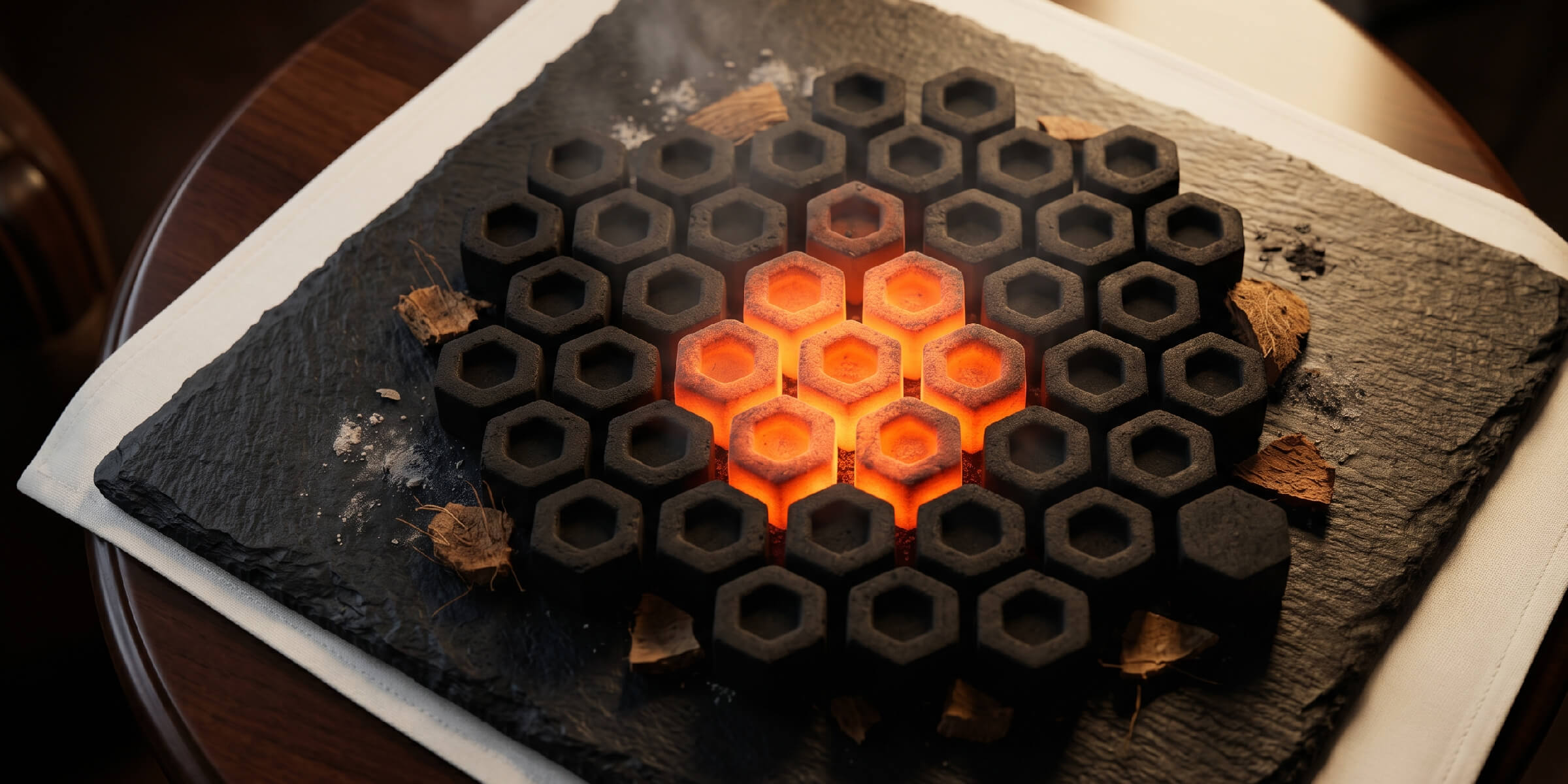
Water treatment & aquaculture
Coconut shell activated carbon, ASTM D4607, with the COA on every lot.
Municipal water plants, RO systems, distilleries, aquaculture biofilters, gold recovery, and OEM filter manufacturers. Coconut shell activated carbon at the iodine-number band the spec requires, plus rounded pellets for biofilter media and compressed tablets for residential filter OEMs. Per-lot COA on request, 500 kg MOQ.
Why coconut shell for filtration
>1100 m²/g BET surface area
the high-end of natural activated carbon, with tight micropore distribution that suits small-molecule adsorption (chlorine, taste/odour, low-MW VOCs).
ASTM D4607 iodine number
the standard spec municipal and OEM accounts qualify against, with per-lot value on the COA.
>92% fixed carbon, <4% ash
clean substrate that produces fewer fines and lower pressure drop over the bed life vs. coal-based AC.
Multiple form factors
granular and pellet for water plants, powder for batch dosing, rounded pellets for biofilter beds, compressed tablets for residential filter OEMs.
Food-grade and pharma-grade options
same coconut shell base, lot-level testing scaled to the application. FDA-compliance documentation available on request for pharma OEM accounts.
The water-treatment SKU mix
Activated coconut is the workhorse; activated bamboo covers the air and gas-phase adsorption end; rounded pellets serve aquaculture and aquarium biofilters; tablets fit OEM residential filter cartridges.
- 01 Activated Coconut Shell Charcoal
Pharma-grade activated carbon — >92% fixed C, >1100 m²/g BET, ASTM D4607 — for RO plants, distilleries, gold recovery
Fixed C: > 92% Ash: < 4% From ₹699 - 02 Activated Bamboo Charcoal
800-1200 m²/g surface area — for air purifiers, water filtration and pharmaceutical adsorption
Fixed C: > 90% Ash: < 5% From ₹899 - 03 Coconut Shell Charcoal Pellets (Rounded)
5-8mm spherical pellets for biofilter beds, aquaculture and pond filtration
Fixed C: 80–85% Ash: < 4% From ₹449 - 04 Bamboo Charcoal Tablets
Compressed tablets for residential filters, humidifier OEMs and appliance deodorisers
Fixed C: 82–85% Ash: < 3% From ₹399
Bulk savings on AC supply
1 MT / month at tier 3 (15% off) typically saves ₹20,000–₹40,000 / month vs. retail.
OEM filter brands on annual contracts get fixed iodine-number bands and locked-in lead times — quote includes COA cadence and packing format.
Why coconut shell beats the alternatives
Coconut AC vs. coal-based activated carbon
Coconut shell has a tighter micropore distribution — better for small-molecule adsorption (chlorine, taste, odour) that municipal and residential water need. Coal-based AC suits broader-pore industrial wastewater. Coconut also runs cleaner: lower ash, less hardness loss, fewer fines over bed life — important for food-grade and drinking-water duty.
Coconut AC vs. synthetic ion-exchange resins
Activated carbon adsorbs organics, chlorine, taste and odour — resins target dissolved ionic species. They serve different stages. AC is also one-time consumable (no regeneration chemicals or waste brine), simpler operationally for plants under ~10 MLD where resin regeneration economics don't pay off.
Water treatment — FAQ
What's the iodine number of your activated coconut carbon?
Indicative range: our activated coconut shell carbon is produced to ASTM D4607 (the iodine number test method), with typical lot values in the 1000-1100 mg/g band — pharma-grade. Higher iodine numbers (1100+) are available on request for specific applications. The per-lot COA ships with iodine number, methylene blue value, hardness, ash and moisture for every order.
How often should I backwash the activated carbon bed?
Typical RO pre-filter backwash schedules run every 3-7 days at 20-30% bed expansion, but the right cadence depends on incoming water quality (chlorine, TOC, suspended solids), the bed depth, and the flow rate. For a city-water RO inlet, weekly backwash is a common baseline; for high-TDS or pre-filtered borewell, you can stretch to fortnightly. Bed replacement is typically annual for chlorine removal duty, longer (2-3 years) for TOC polishing.
How does coconut shell activated carbon compare with coal-based AC?
Coconut shell AC has a tighter micropore distribution — better for small-molecule adsorption (chlorine, taste, odour, low-MW VOCs) and the preferred substrate for residential and municipal water. Coal-based AC has broader pore distribution and better mesopore content, which suits larger-molecule adsorption (industrial wastewater, dye removal). Coconut also runs cleaner — lower ash, lower hardness loss, fewer fines in service — which matters for fast-flow applications where pressure drop builds up over the bed life.
Is the coconut activated carbon food-grade or pharma-grade?
Food-grade and pharma-grade variants both come from the same coconut shell base material — the difference is the lot-level testing. Our standard Activated Coconut Shell Charcoal ships with ASTM D4607 COA on request and is suitable for drinking-water and food-contact applications. FDA-compliance certification on the manufacturing process is available on request for pharma OEM accounts that need to file with their regulatory submission.
Do you supply for aquaculture and aquariums as well as municipal water?
Yes — the Rounded Coconut Shell Pellets product is specifically formatted for biofilter beds, aquarium media chambers and aquaculture pond filtration. 5-8mm spherical pellets drop neatly into media columns without binding flow. We supply both ornamental aquarium chains and commercial aquaculture operations (fish ponds, hatcheries) across South India. Heavy-metal tested with COA on request.
What's the MOQ and lead time for industrial activated carbon supply?
Standard packing is 25 kg sacks. Industrial MOQ is 500 kg with practical economic shipping at 1 MT+. Granular and pellet gradings ship from stock with 3-5 day lead time. Powder grade ships 5-7 days. Custom mesh sizes and impregnated variants (e.g. KMnO₄-impregnated for H₂S removal) take 10-15 days lead time. Request a quote with your application spec — we'll come back with iodine number band, particle size and dispatch window.