Charcoal Lumps
Natural charcoal lumps — raw, kiln-cured, chemical-free
Hardwood, softwood, smoked, flavoured and coconut shell — the original form of charcoal. BBQ pits to foundry feedstock.
- FSSAI
- ISO 9001
- IS-1448
- Halal
- Made in India
Natural charcoal lumps are the original form of charcoal: raw biomass — hardwood, softwood, bamboo culm or coconut shell — slow-carbonised in an oxygen-starved kiln until the volatiles cook off and what's left is mostly fixed carbon. The wood's cell structure stays intact. No binders, no compression, no additives.
Lumps are the format BBQ purists prefer because they carry the source material's flavour and throw the highest peak heat. Hardwood lumps from mango, acacia, neem and sheesham are the workhorses of Indian tandoor and sigri cooking. Smoked and flavoured lumps (mesquite, applewood, cherrywood) add a second layer of smoke for low-and-slow BBQ. Industrial lumps with > 75% fixed carbon feed metallurgy, foundries and activated carbon plants.
Lumps ship surface-only (UN 1361 Class 4.2). HSN 4402 10 00 (wood) / 4402 90 10 (coconut), GST 5%. Pan-India delivery 4–10 days.
Charcoal lumps vs LPG, PNG, synthetic briquettes and coal
Lumps deliver the highest peak heat per kg of any biomass fuel — comparable to LPG for searing, but with the wood aroma that defines authentic BBQ and tandoor cooking. Coal looks similar in price per kcal but contaminates food with sulphur.
| Dimension | LPG | PNG | Synthetic briquettes | Coal | Charcoal (WoodCharcoal) |
|---|---|---|---|---|---|
| Source | Petroleum LPG (propane + butane) | Fossil natural gas, piped | Coal fines + paraffin / sawdust + petroleum binders | Mined bituminous or lignite — fossil carbon | Carbonised waste biomass — wood, bamboo, coconut shell |
| Calorific value | ~11,900 kcal/kg (very high) | ~8,500 kcal/Nm³ | 5,500–6,500 kcal/kg | 4,000–6,500 kcal/kg | 6,800–7,800 kcal/kg |
| Fixed carbon | Hydrocarbon gas — not measured | Methane gas — not measured | 55–65% (binder dilutes carbon) | 45–70% with high volatiles | 70–92% (coconut shell + activated top the range) |
| Ash residue | Zero | Zero | 10–15% — sooty, sticks to grates | 10–20% — clinker forms in grate | < 4% (premium grades < 3%) |
| Smoke & odour | Clean flame, faint hydrocarbon smell | Clean flame, near-odourless | Acrid smoke from binders, plastic notes | Heavy black smoke + sulphur dioxide | Near-smokeless once lit — clean wood aroma |
| Burn time / hold | Continuous — depends on flow | Continuous — depends on flow | 60–90 min, uneven | Long burn but slow to light | 2–4 hrs lump · 60–90 min hookah hex · 4–6 hrs blocks |
| Food-contact safety | Safe — gas flame, no residue | Safe — gas flame, no residue | Avoid for direct food cooking — binders contaminate | Avoid — sulphur transfers to food | Food-safe — used in tandoor, sigri and BBQ for centuries |
| Cost per kcal delivered | ₹ 4.5 / 1000 kcal (subsidised), ₹ 6 (commercial) | ₹ 3.8 / 1000 kcal at metered rate | ₹ 2.8 / 1000 kcal — but high ash wastes heat | ₹ 1.5 / 1000 kcal — but environmental + cleaning cost | ₹ 2.2 / 1000 kcal — and zero ongoing infra |
| Carbon footprint | ~3 kg CO₂e per kg burned (fossil) | ~2.7 kg CO₂e per kg burned (fossil) | ~2.8 kg CO₂e + petroleum binder emissions | ~2.4 kg CO₂e per kg — highest particulate load | Near carbon-neutral — agri-waste biomass cycle |
Sources: BEE biomass factsheets, ICAR-NIRJAFT char comparative studies, MSDS sheets for syndicated petroleum-binder briquettes.
Shop lumps
All 12 lumps SKUs across wood, bamboo and coconut shell. Tap any product for pack sizes, fixed-carbon %, calorific value and live inventory.
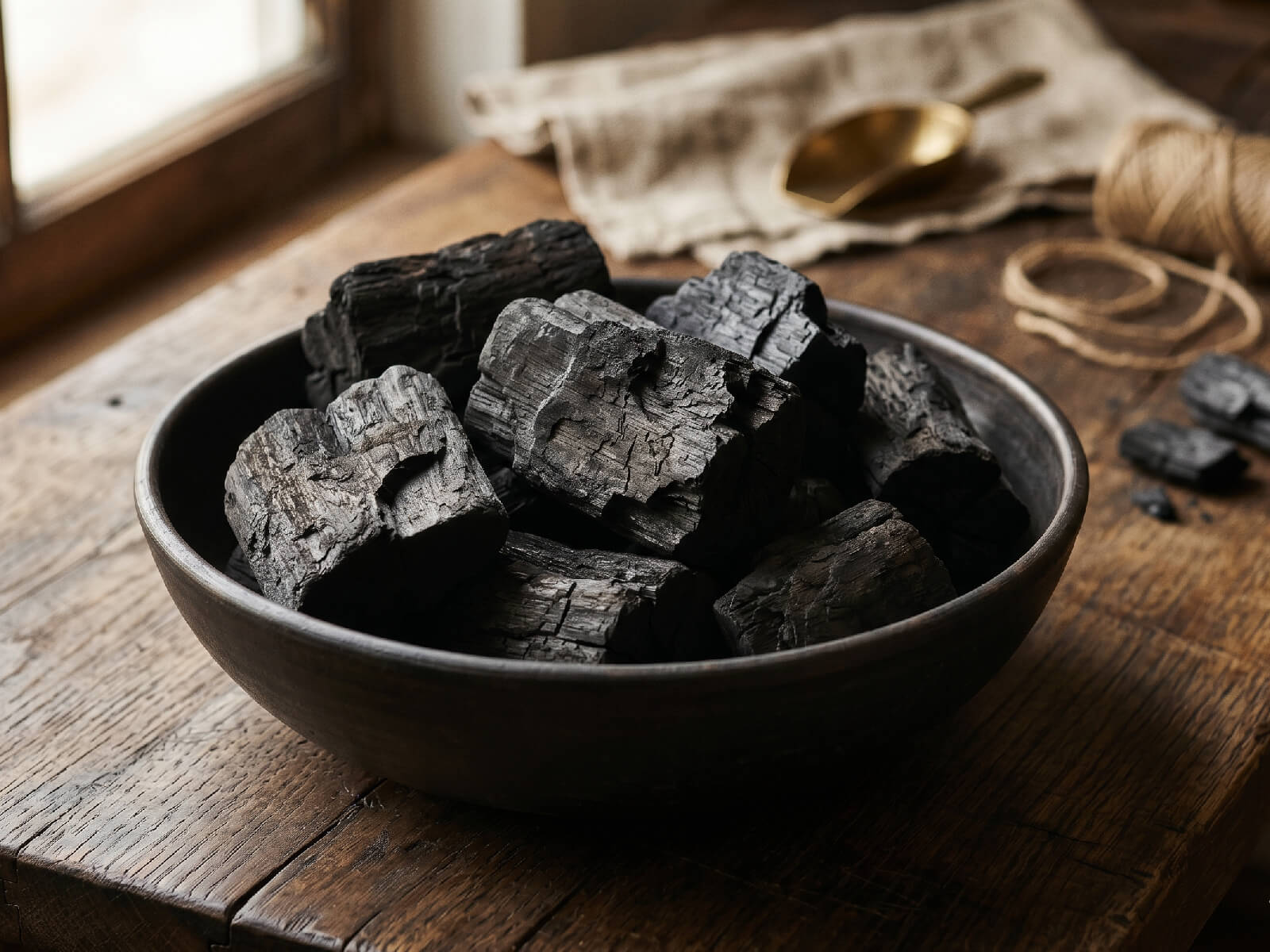 WoodBestseller
Hardwood Charcoal Lumps
Dense hardwood chunks for BBQ, grilling and tandoor
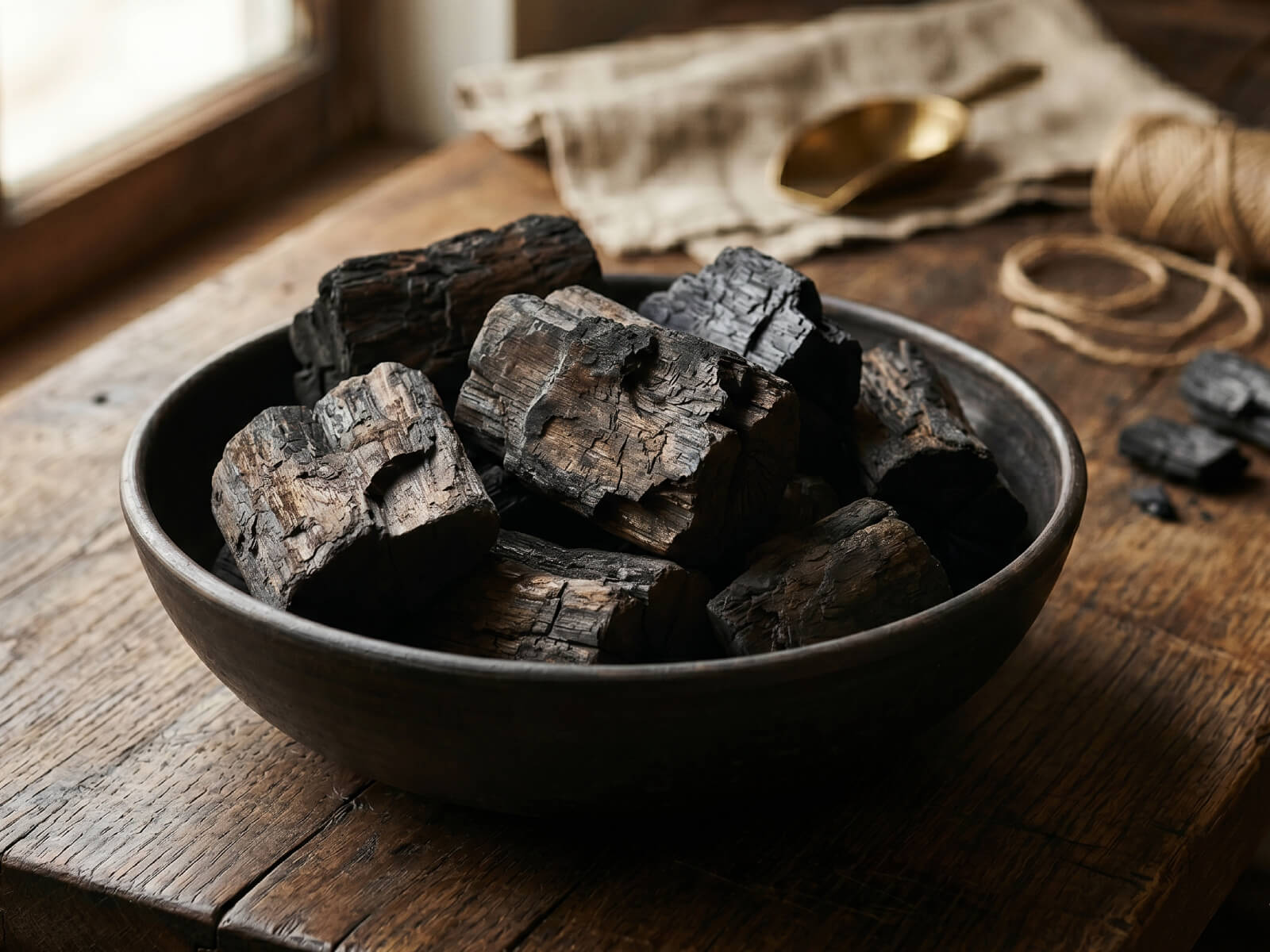 Wood
WoodSmoked Charcoal Lumps
Pre-smoked hardwood lumps for BBQ flavour
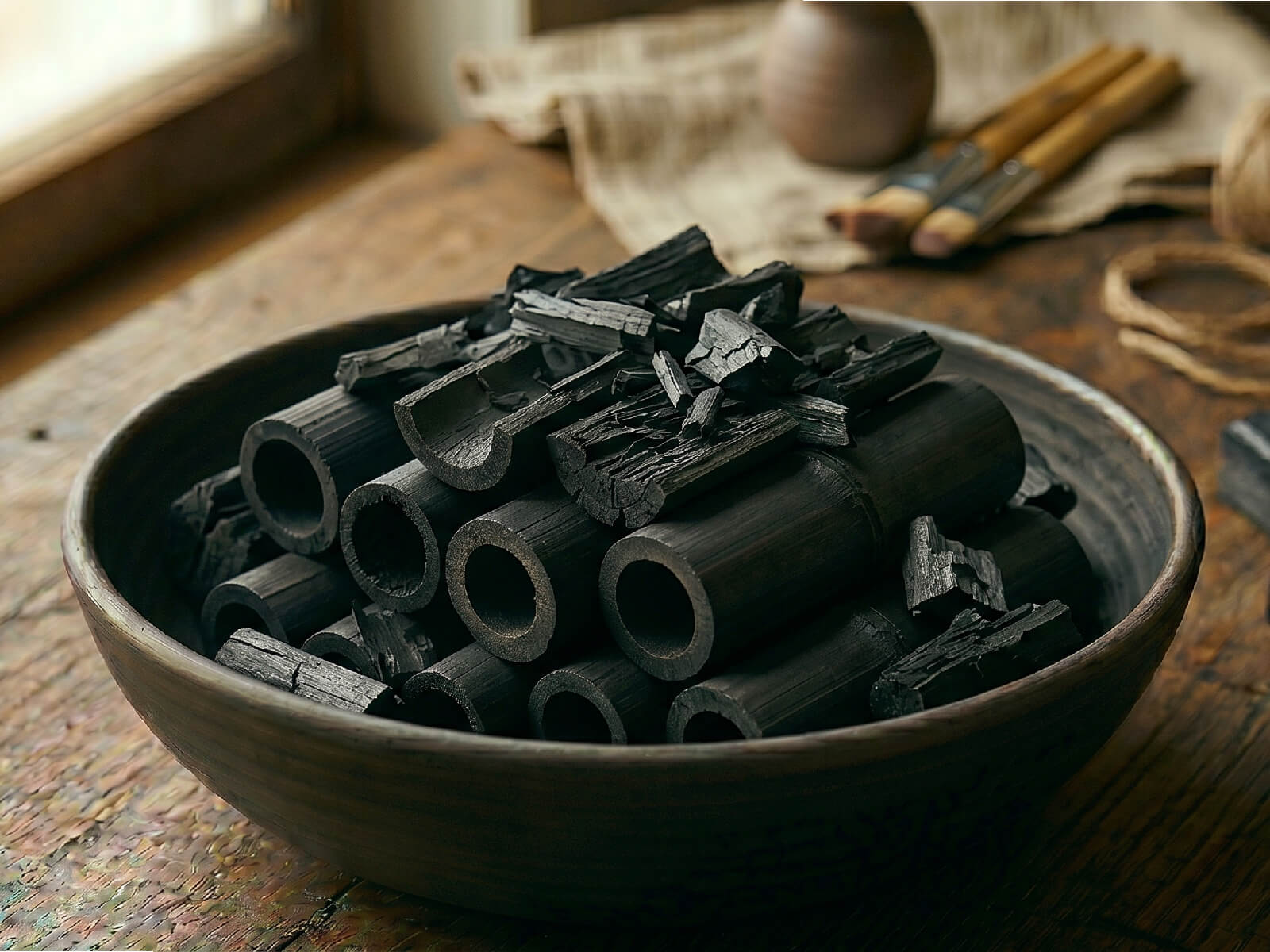 Bamboo
Bamboo Charcoal Lumps
Hollow bamboo sections carbonised whole
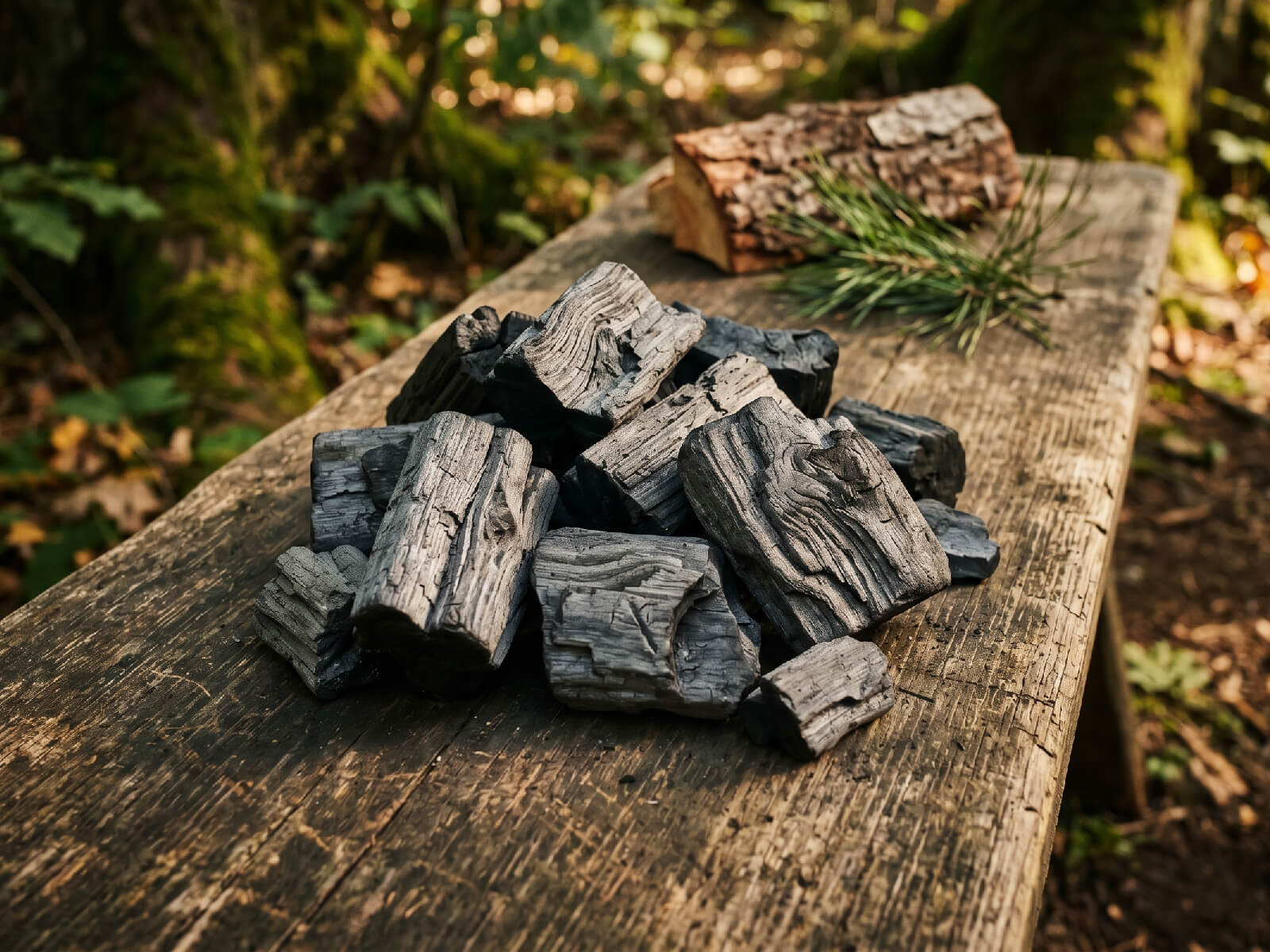 Wood
WoodSoftwood Charcoal Lumps
Pine & cedar lumps — fast, hot, lighter flavour
 Bamboo
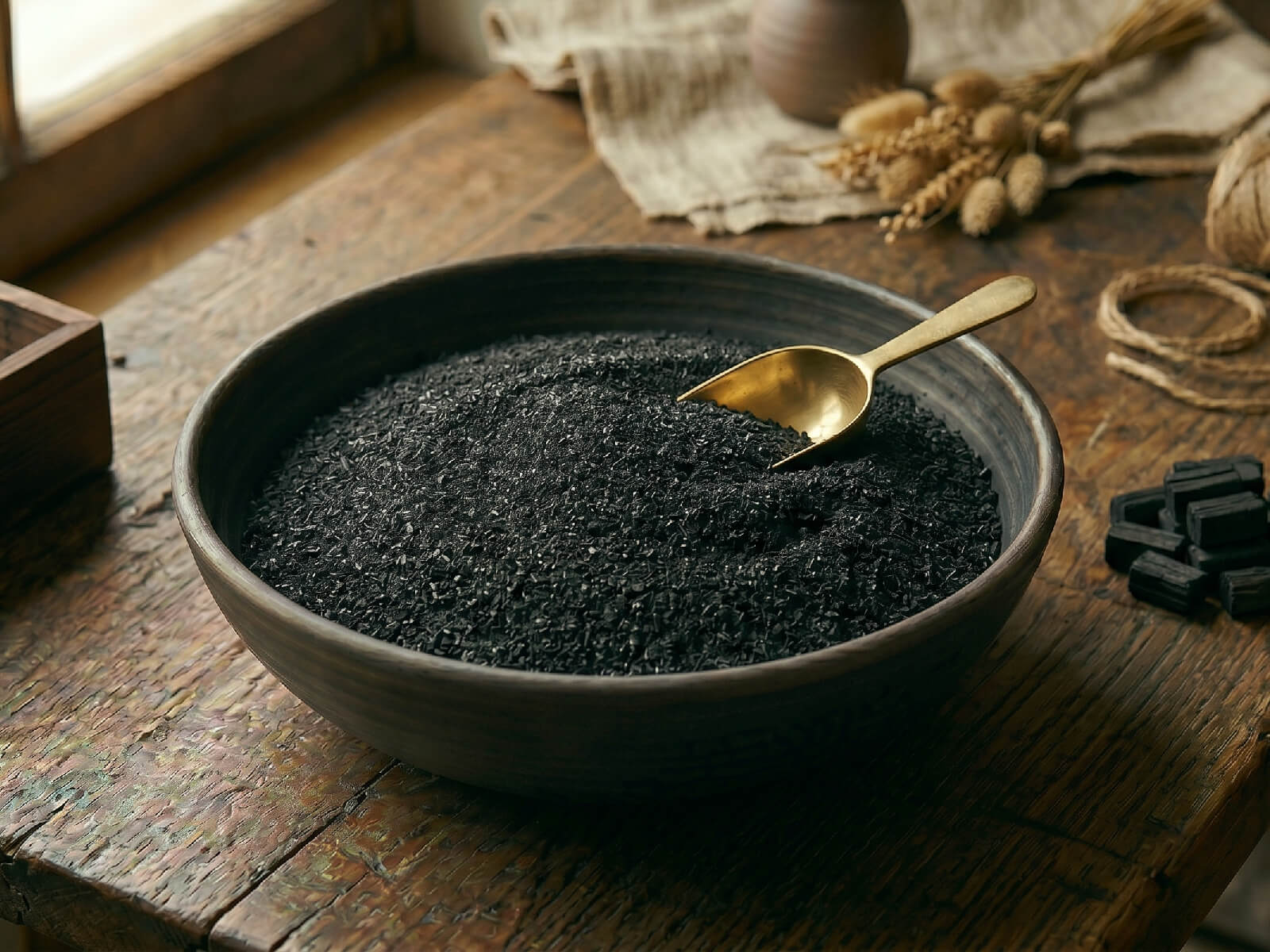
Bamboo Charcoal Fines
Sub-mm bamboo charcoal — soil amendment & briquette feedstock
 Wood
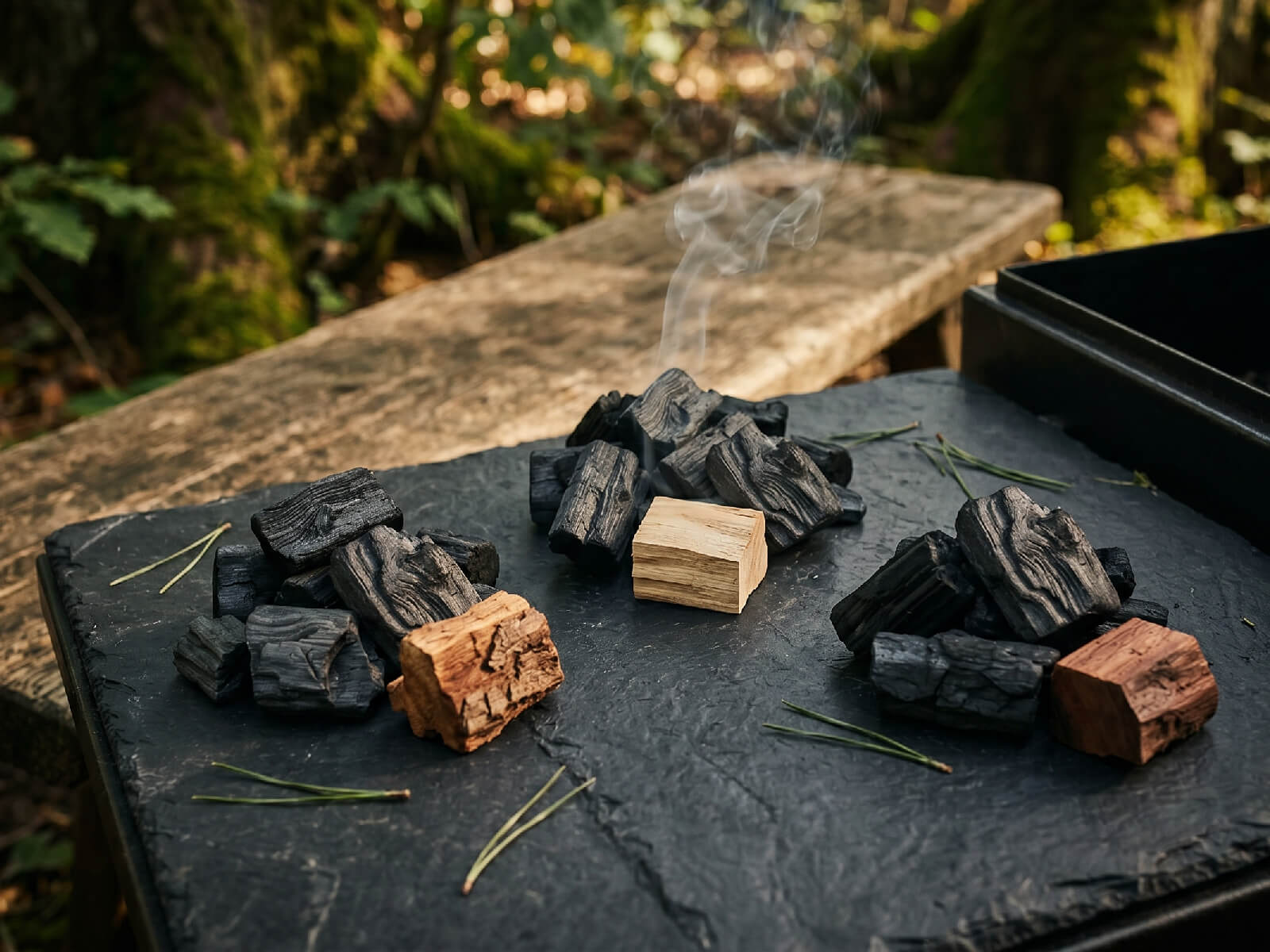
WoodFlavored Wood Charcoal
Mesquite, apple & cherrywood-infused lumps for signature BBQ
 Bamboo
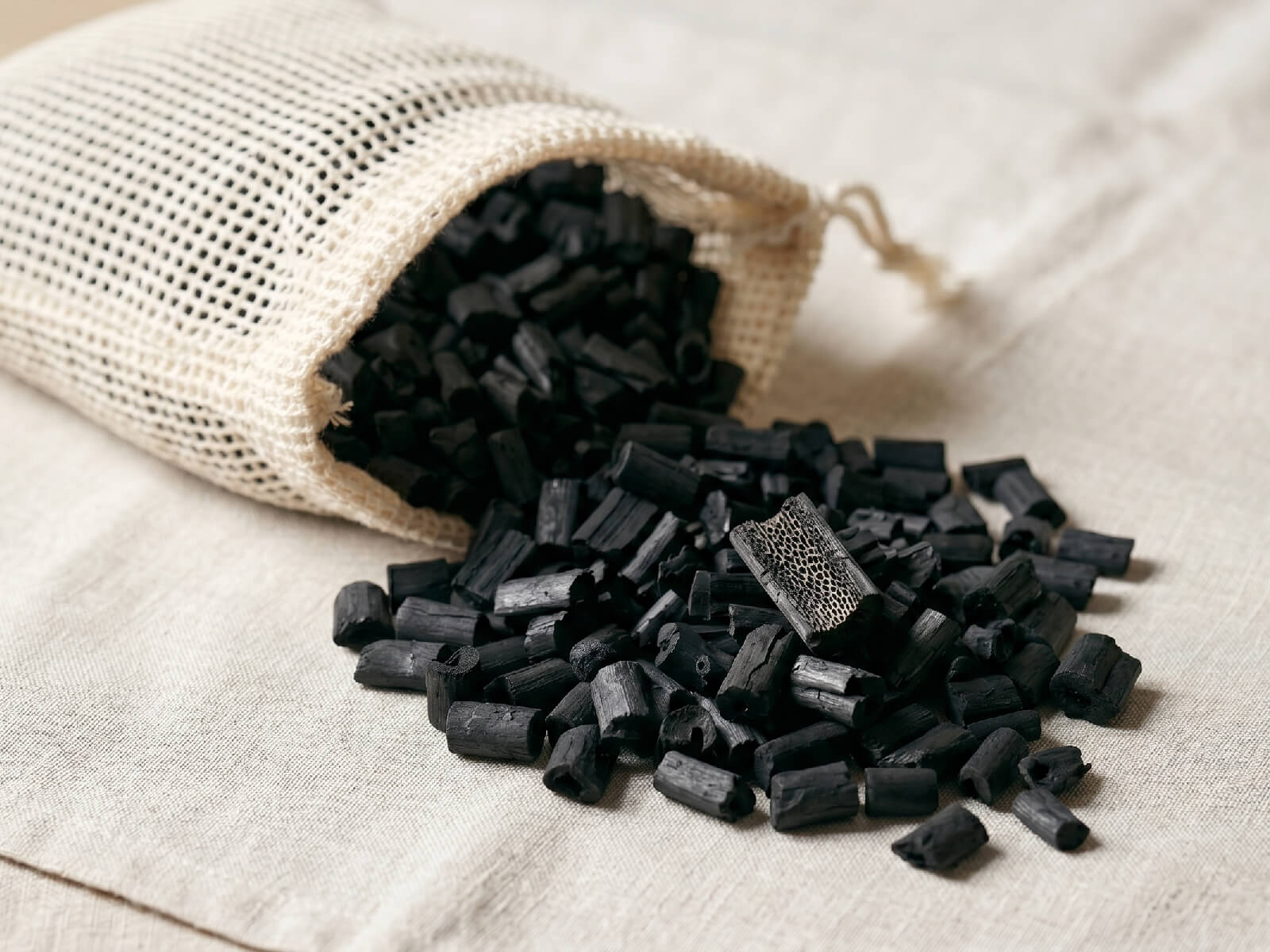
Bamboo Charcoal Chips
Small adsorbent chunks for purifiers and deodorisers
 Wood
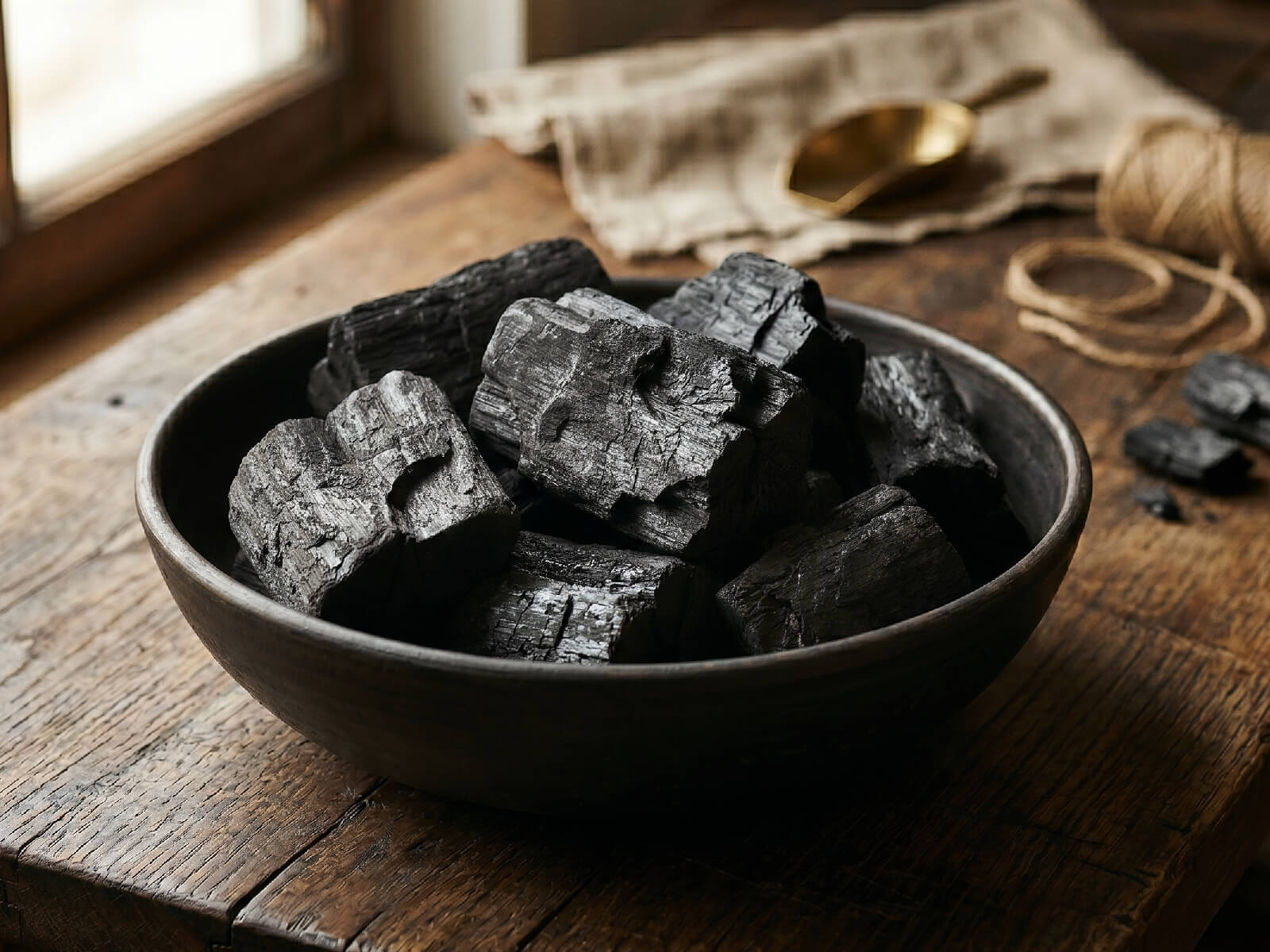
WoodIndustrial Charcoal Lumps
High fixed-carbon lumps for metallurgy and manufacturing
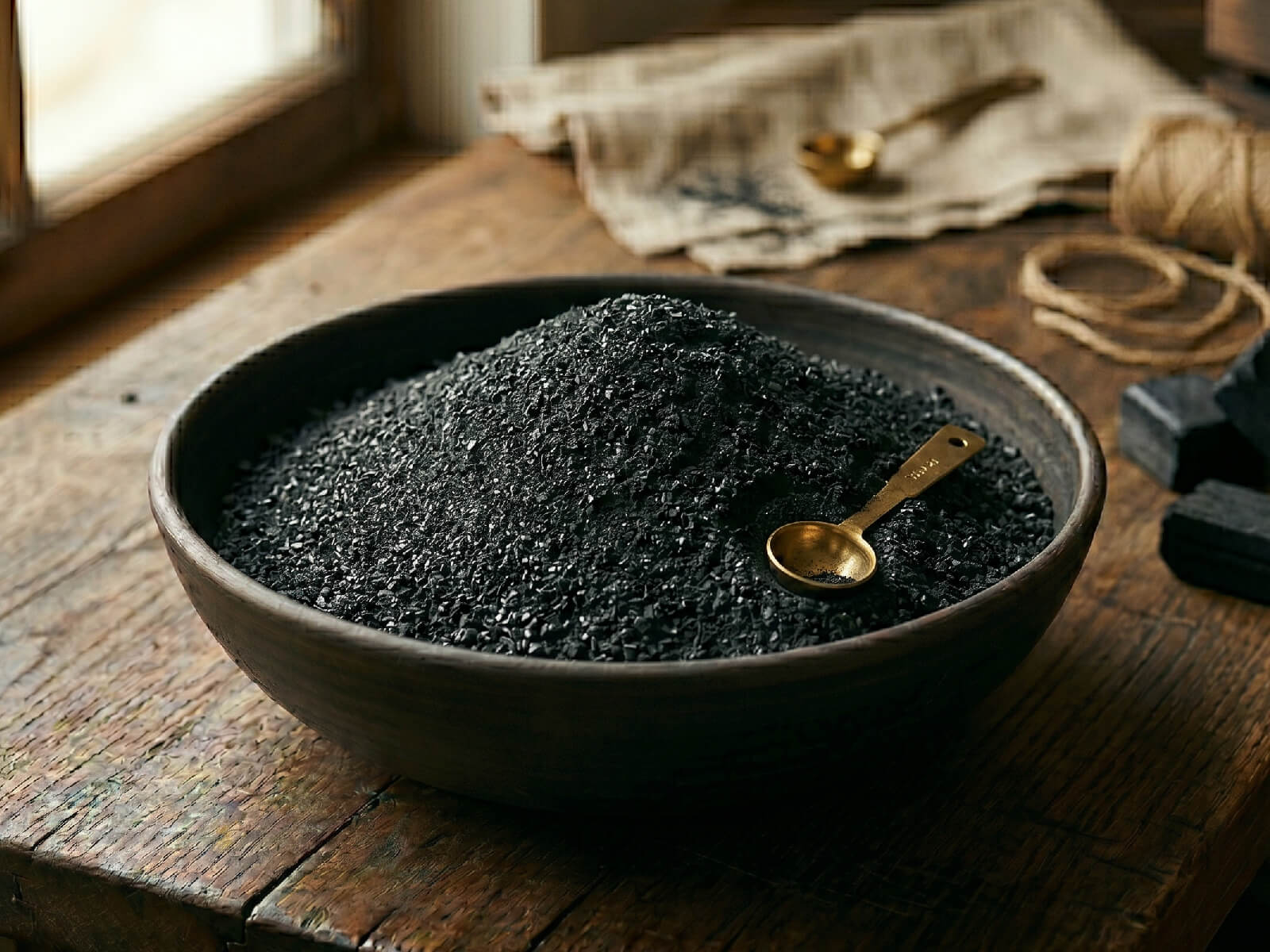 Wood
WoodCharcoal Fines
Sub-mm particle residue for soil conditioner and binder feedstock
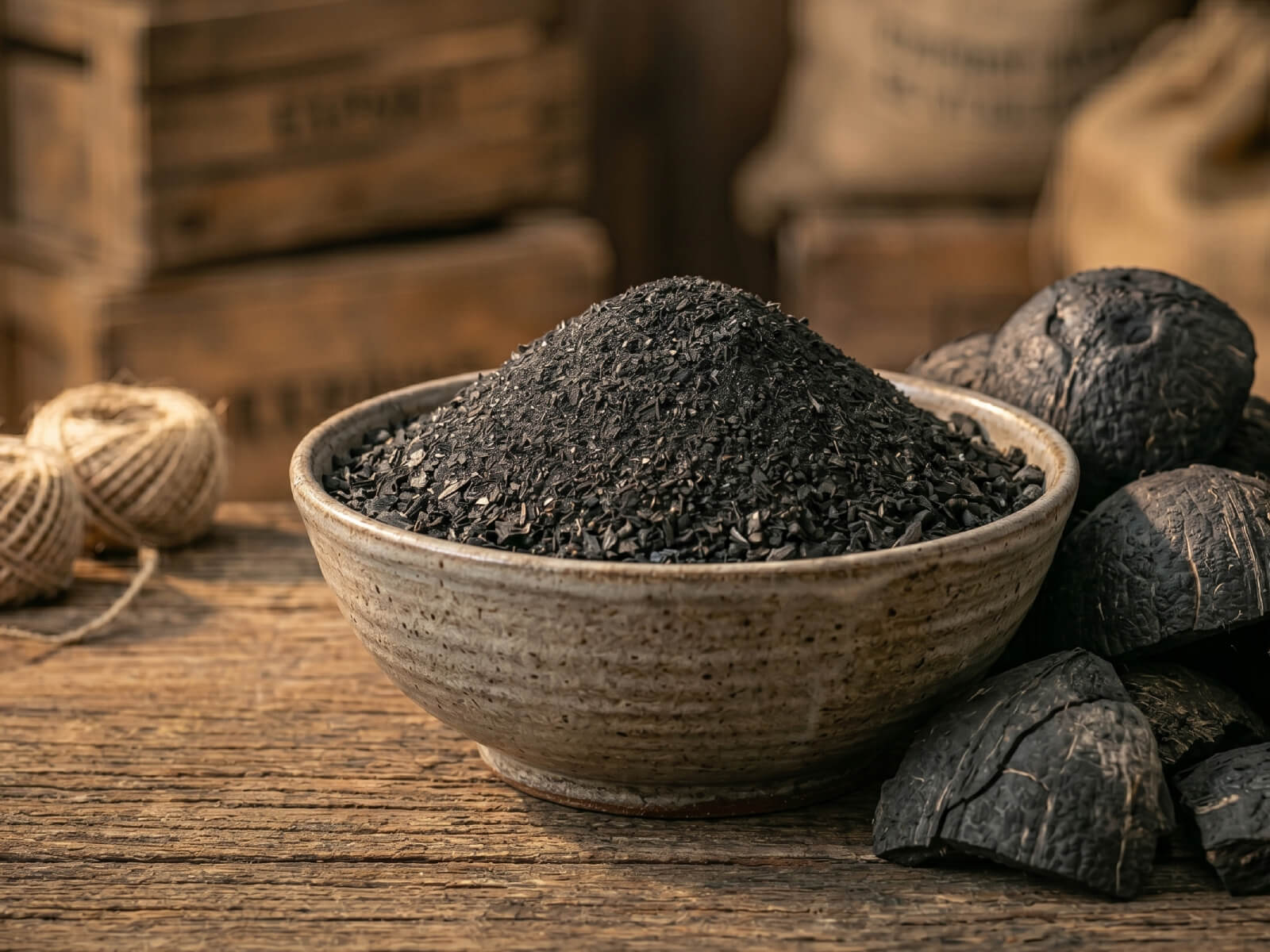 Coconut
Coconut Shell Industrial Lumps
Industrial-grade coconut shell lumps — feedstock for activated carbon
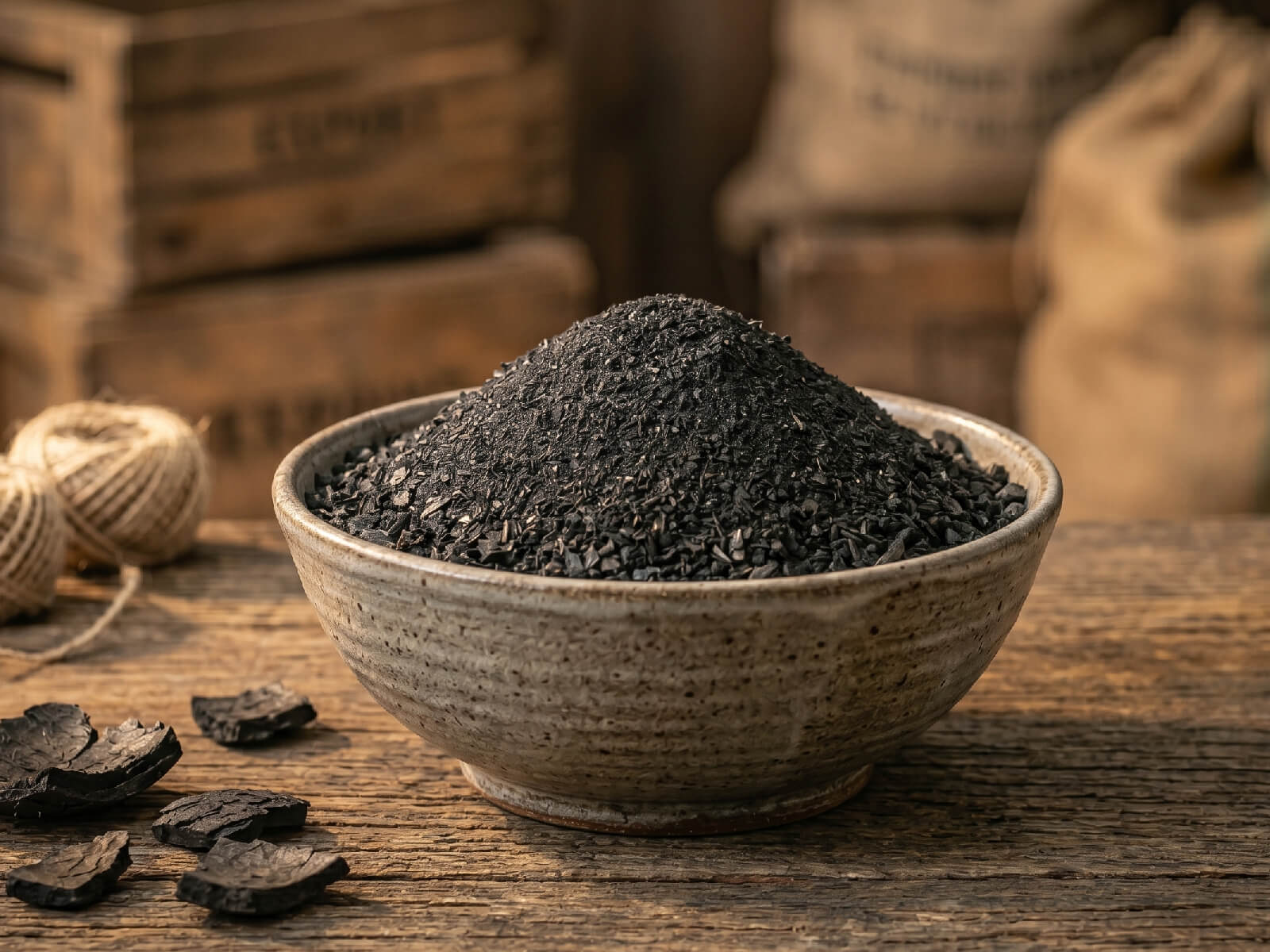 Coconut
Coconut Shell Charcoal Fines
Sub-mm coconut shell charcoal — activated carbon & soil
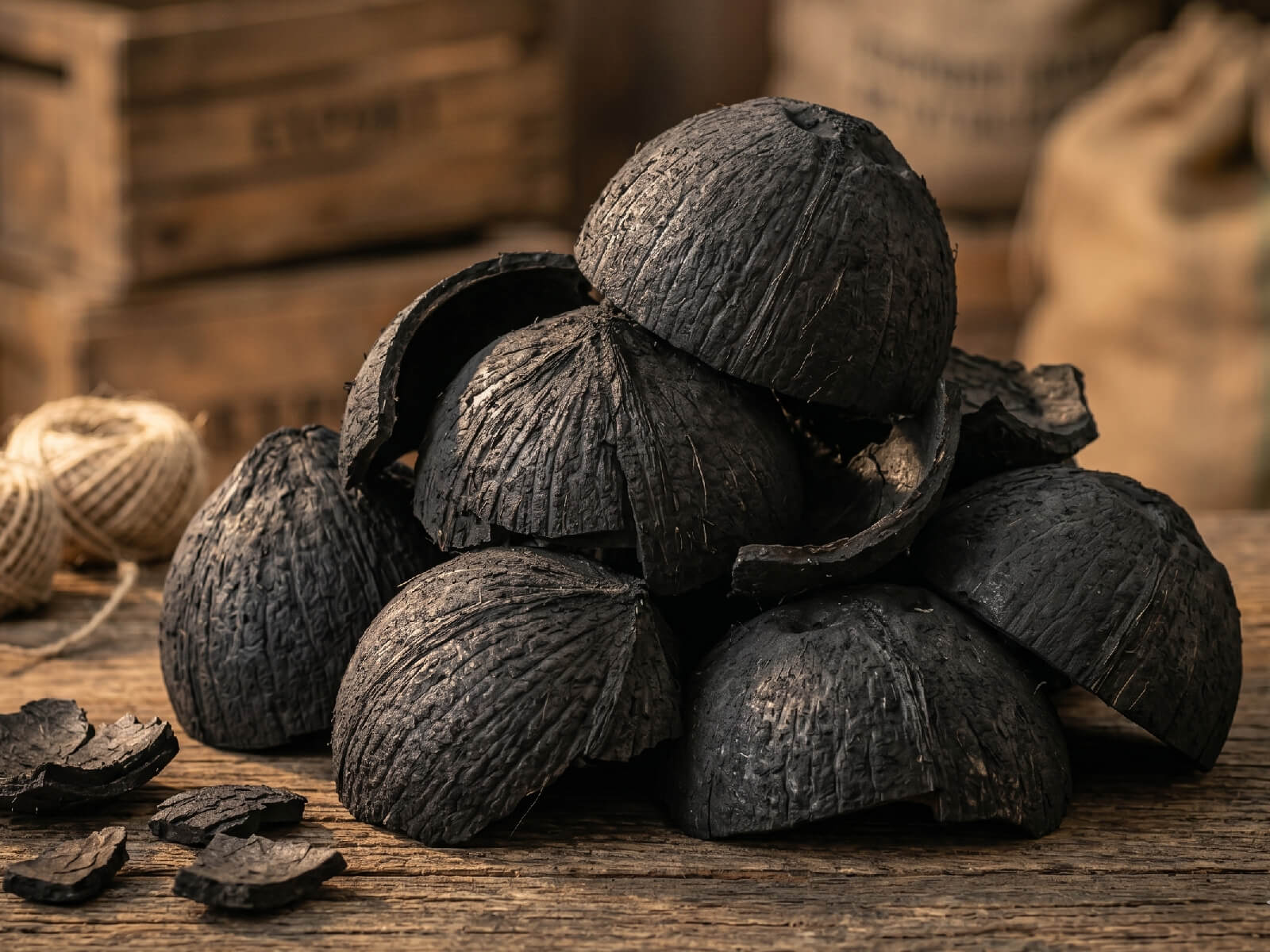 Coconut
Coconut Shell Charcoal Lumps
Raw carbonised coconut shell pieces — export grade
Who's buying charcoal lumps from WoodCharcoal.in?
BBQ enthusiasts + restaurants
Hardwood lumps for tandoor, sigri and kettle-grill BBQ. Smoked + flavoured lumps for signature menus. 1kg through 30kg packs with home + restaurant pricing.
Metallurgy + foundries
Industrial lumps with > 75% fixed carbon and tight size grading. ISO 9001 + SGS on request, 50kg sacks, MOQ 500 kg. Direct-from-kiln dispatch.
Activated carbon plants
Coconut shell + industrial wood lumps as carbonised feedstock. Bulk container loads to South India and export buyers. COA per lot, SGS available.
Buying by the tonne? Apply for wholesale pricing →
Lump specifications
Typical burn profile
- Fixed carbon: 65–85% depending on grade
- Ash: 3–6% (coconut lowest, softwood + fines highest)
- Moisture: < 6%
- Burn time: 1.5–4 hrs depending on density
- Calorific value: 6,800–7,800 kcal/kg
- Volatile matter: 18–26% (drives flavour)
Standards every WoodCharcoal SKU passes
- FSSAI registered: approved for food-grade applications (tandoor, sigri, BBQ, smokers)
- ISO 9001: quality management system across our Rajkot facility + partner kilns
- Halal certified: hookah and food-contact grades on request — required for Middle East export
- IS-1448 calorific value testing: Indian Standard test method on every batch
- State Pollution Control Board: consent to operate at carbonisation kiln + partner sites
- UN 1361 safe transport: surface dispatch only — air freight requires special certification
- 100% waste-stream sourced: no virgin timber felling — agri-residue + coconut byproduct only
- Made in India: Gujarat, Maharashtra and South India carbonisation under GMP processes
Material & dispatch
- HSN 4402: 4402 10 00 (wood) · 4402 90 10 (coconut shell) · 4402 90 90 (other vegetable charcoals)
- GST 5%: standard rate for charcoal (HSN 4402); 18% on activated carbon (HSN 3802) per CBIC rate notification
- No virgin pulp / no plastic binder: compressed with natural starch where applicable
- Moisture controlled: kiln-dried to < 6% — packs ship hard, light and ready to fire
- Surface dispatch only: UN 1361 Class 4.2 — air freight is not offered (regulatory)
- Pan-India delivery: Shiprocket surface — 4–10 days typical, all serviceable PIN codes
Frequently asked questions
Are lumps better than briquettes for BBQ?
For flavour and peak heat — yes. Lumps light faster, get hotter and carry the wood's character into the food. For consistency over a long catering shift — briquettes win because every piece behaves the same. Most pros keep both: lumps for the initial sear, briquettes for sustained heat through the rest of service.
What's the difference between hardwood and softwood lumps?
Hardwood (mango, acacia, neem, sheesham) — denser, longer burn (3–4 hrs), higher calorific value (~7,200 kcal/kg), bolder smoke. Best for tandoor, sigri and long BBQ. Softwood (pine, cedar, fir) — lighter density, faster + hotter burn (1.5–2.5 hrs), milder smoke. Best for quick-cook proteins (fish, seafood, steak) and blacksmith forges.
What are smoked and flavoured lumps?
Smoked lumps are pre-cured a second time with wood smoke during cooling, layering aromatic depth into the charcoal itself. Flavoured lumps add a specific aromatic — mesquite (assertive Tex-Mex BBQ), applewood (soft fruit smoke for pork/poultry), cherrywood (sweet warm note for ribs and game). The flavour goes into the meat as the charcoal burns.
Why are industrial lumps different from BBQ lumps?
Industrial lumps are size-graded and produced to tight fixed-carbon (> 75%), low-ash (< 3%) and low-moisture (< 5%) specs because metallurgy customers need predictable reduction chemistry. BBQ lumps prioritise burn behaviour and flavour. Industrial lumps with SGS testing also feed activated carbon plants as raw material.
Do you sell coconut shell lumps?
Yes — South India coconut shell lumps, 80–85% fixed carbon, < 3% ash, 7,800 kcal/kg. Export-grade with SGS on request and COA per lot. Primarily bought as activated carbon feedstock, but also used for premium BBQ where minimal ash is the priority.
How long do lumps burn?
Hardwood lumps: 3–4 hours per kg in a sigri or kettle grill at typical BBQ temperatures. Softwood: 1.5–2.5 hours. Coconut shell lumps: closer to 2 hours but hotter peak. Burn time depends heavily on airflow — a starved fire holds heat longer; an open grill burns faster and hotter.
Other questions? See our general FAQ or contact our team.
Hotels · Restaurants · Caterers · Distributors
Buying lumps by the tonne?
Verified wholesale accounts get 15% off D2C list, NET-15 invoice terms and direct-from-kiln dispatch.
Cross-shop: compressed briquettes · activated carbon · BBQ starter kit · export-grade range