Activated Carbon
Activated carbon — 1100+ m²/g surface area, the engineering-grade adsorbent
Coconut shell + bamboo activated grades for water filtration, air purification, pharma decolourisation and aquaculture. ASTM D4607 tested, COA per lot.
- FSSAI
- ISO 9001
- IS-1448
- Halal
- Made in India
Activated carbon is charcoal that has been steam- or chemically-activated to dramatically expand its internal pore structure. Where raw charcoal has 50–200 m²/g of surface area, activated coconut shell carbon can hit 1100+ m²/g — a teaspoon of it has the internal surface area of a tennis court. That's what makes it the single most useful adsorbent material in engineering.
Coconut shell-based activated carbon is the global pharma + water-filtration standard. Bamboo activated carbon hits 800–1200 m²/g and is widely used in air purifiers, residential water filters, humidifier reservoirs and OEM deodorising appliances. WoodCharcoal supplies activated grades in lumps, granular, powder, tablets and beads — sized to drop into your filter housing, biofilter bed, dehumidifier sachet or OEM cartridge directly.
Activated carbon ships under HSN 3802, GST 18% (not the 5% rate for raw charcoal — different CBIC notification). Surface dispatch (UN 1361 doesn't apply to activated grades, but we still ship surface for handling consistency). ASTM D4607 testing + COA per lot on industrial supply.
Activated carbon vs the alternative adsorbents and fuel grades
Activated carbon competes against zeolites (selective for specific cations) and ion-exchange resins (regenerable, higher capex). The comparison below benchmarks it against the fuel-grade charcoals and fossil fuels we also stock — useful when an industrial buyer is weighing fuel vs filtration spend.
| Dimension | LPG | PNG | Synthetic briquettes | Coal | Charcoal (WoodCharcoal) |
|---|---|---|---|---|---|
| Source | Petroleum LPG (propane + butane) | Fossil natural gas, piped | Coal fines + paraffin / sawdust + petroleum binders | Mined bituminous or lignite — fossil carbon | Carbonised waste biomass — wood, bamboo, coconut shell |
| Calorific value | ~11,900 kcal/kg (very high) | ~8,500 kcal/Nm³ | 5,500–6,500 kcal/kg | 4,000–6,500 kcal/kg | 6,800–7,800 kcal/kg |
| Fixed carbon | Hydrocarbon gas — not measured | Methane gas — not measured | 55–65% (binder dilutes carbon) | 45–70% with high volatiles | 70–92% (coconut shell + activated top the range) |
| Ash residue | Zero | Zero | 10–15% — sooty, sticks to grates | 10–20% — clinker forms in grate | < 4% (premium grades < 3%) |
| Smoke & odour | Clean flame, faint hydrocarbon smell | Clean flame, near-odourless | Acrid smoke from binders, plastic notes | Heavy black smoke + sulphur dioxide | Near-smokeless once lit — clean wood aroma |
| Burn time / hold | Continuous — depends on flow | Continuous — depends on flow | 60–90 min, uneven | Long burn but slow to light | 2–4 hrs lump · 60–90 min hookah hex · 4–6 hrs blocks |
| Food-contact safety | Safe — gas flame, no residue | Safe — gas flame, no residue | Avoid for direct food cooking — binders contaminate | Avoid — sulphur transfers to food | Food-safe — used in tandoor, sigri and BBQ for centuries |
| Cost per kcal delivered | ₹ 4.5 / 1000 kcal (subsidised), ₹ 6 (commercial) | ₹ 3.8 / 1000 kcal at metered rate | ₹ 2.8 / 1000 kcal — but high ash wastes heat | ₹ 1.5 / 1000 kcal — but environmental + cleaning cost | ₹ 2.2 / 1000 kcal — and zero ongoing infra |
| Carbon footprint | ~3 kg CO₂e per kg burned (fossil) | ~2.7 kg CO₂e per kg burned (fossil) | ~2.8 kg CO₂e + petroleum binder emissions | ~2.4 kg CO₂e per kg — highest particulate load | Near carbon-neutral — agri-waste biomass cycle |
Sources: BEE biomass factsheets, ICAR-NIRJAFT char comparative studies, MSDS sheets for syndicated petroleum-binder briquettes.
Shop activated carbon
All 4 activated carbon SKUs across wood, bamboo and coconut shell. Tap any product for pack sizes, fixed-carbon %, calorific value and live inventory.
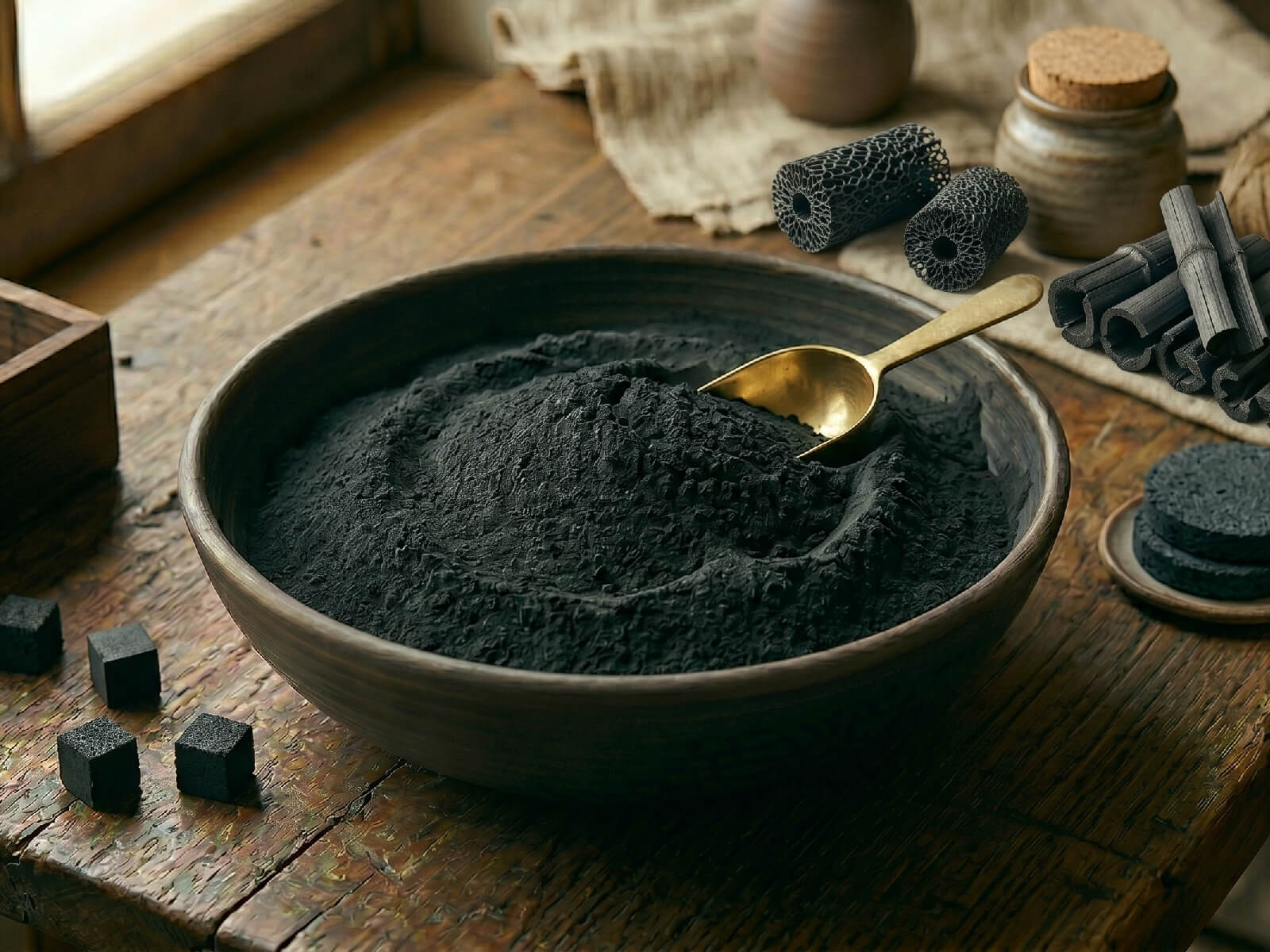 Bamboo
Activated Bamboo Charcoal
Steam-activated bamboo — 800–1200 m²/g surface area
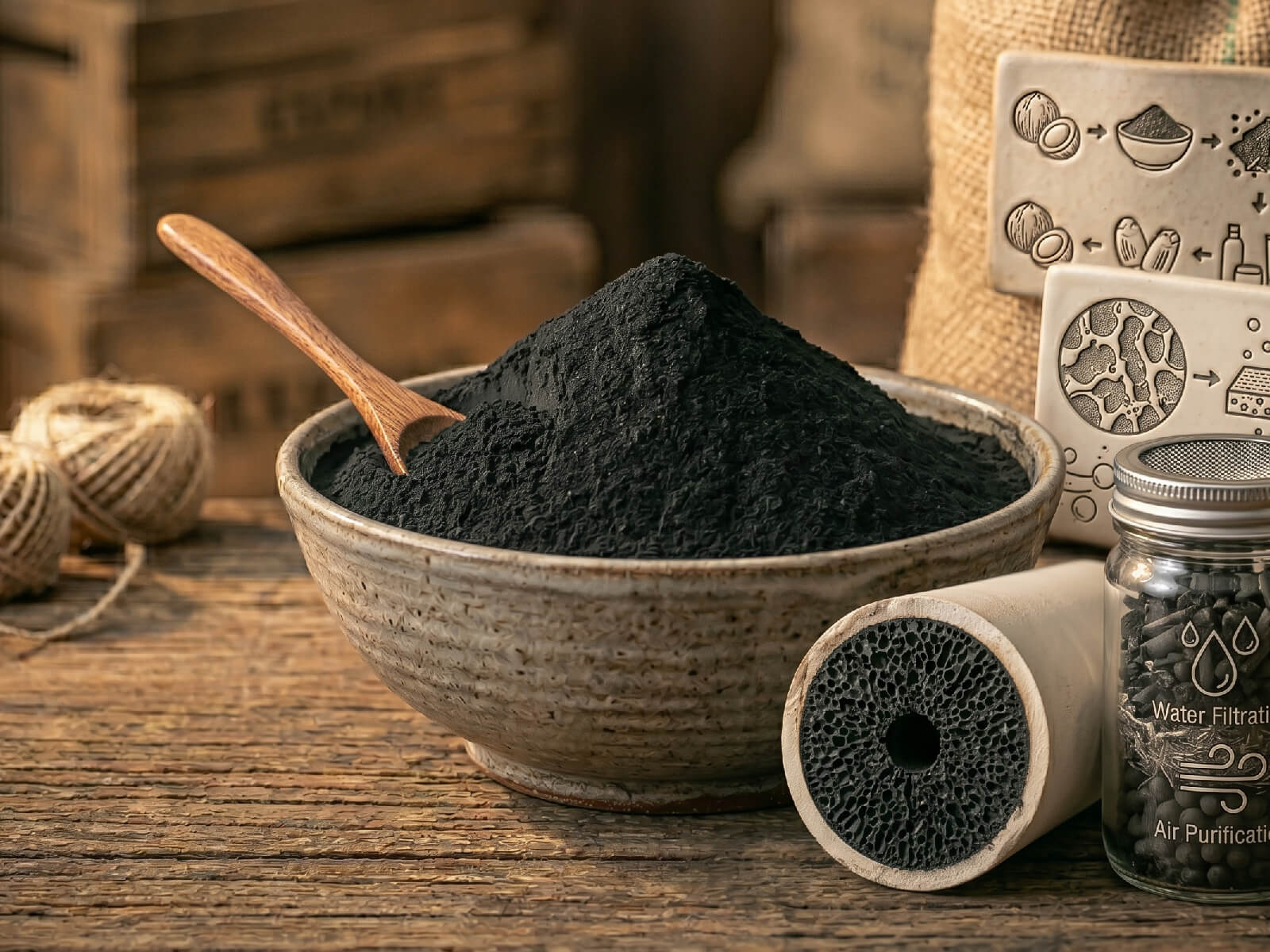 Coconut
Activated Coconut Shell Charcoal
Highest-grade filtration carbon for water, air and pharma
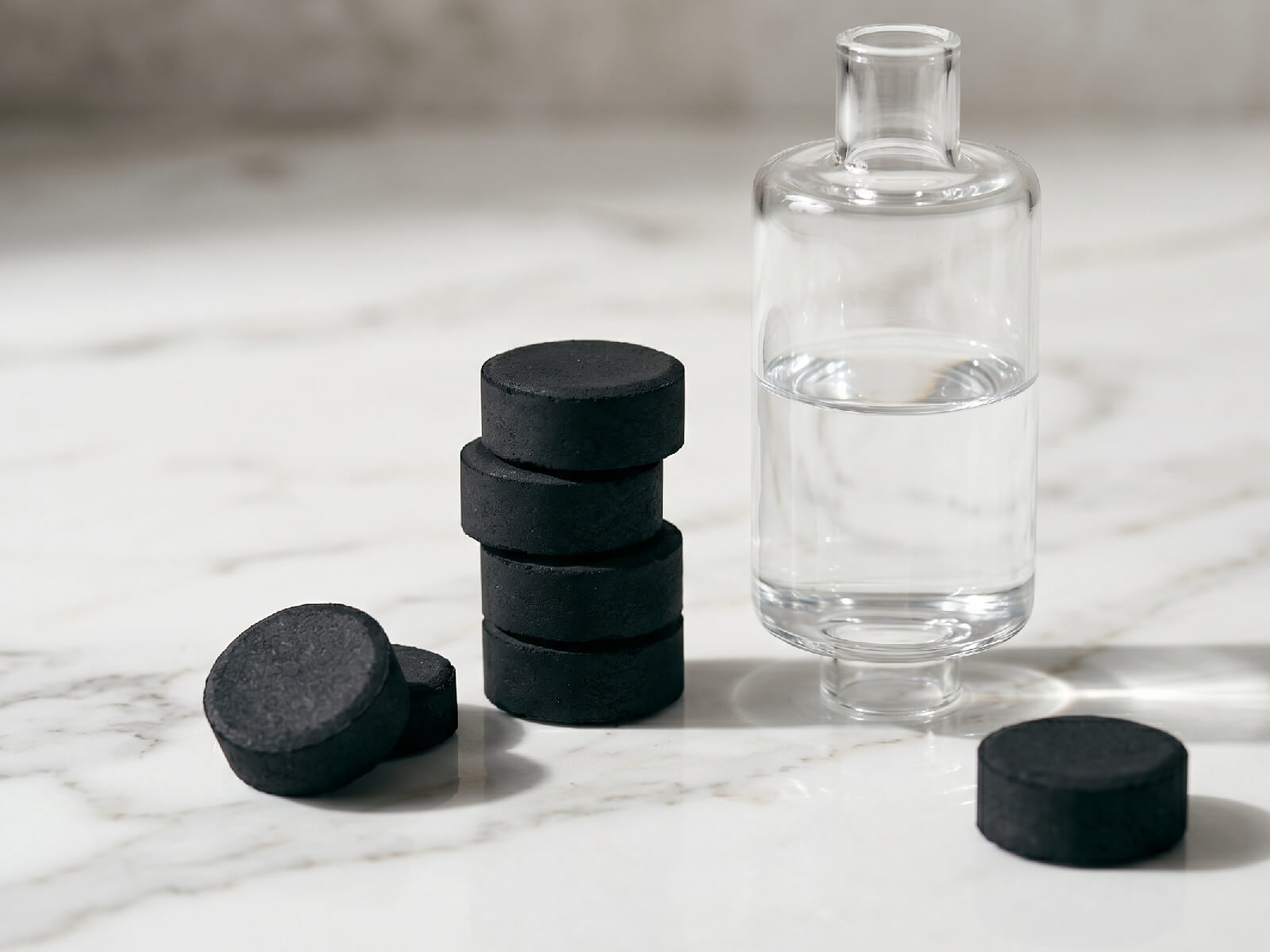 Bamboo
Bamboo Charcoal Tablets
Compressed tablets for water filters and humidifiers
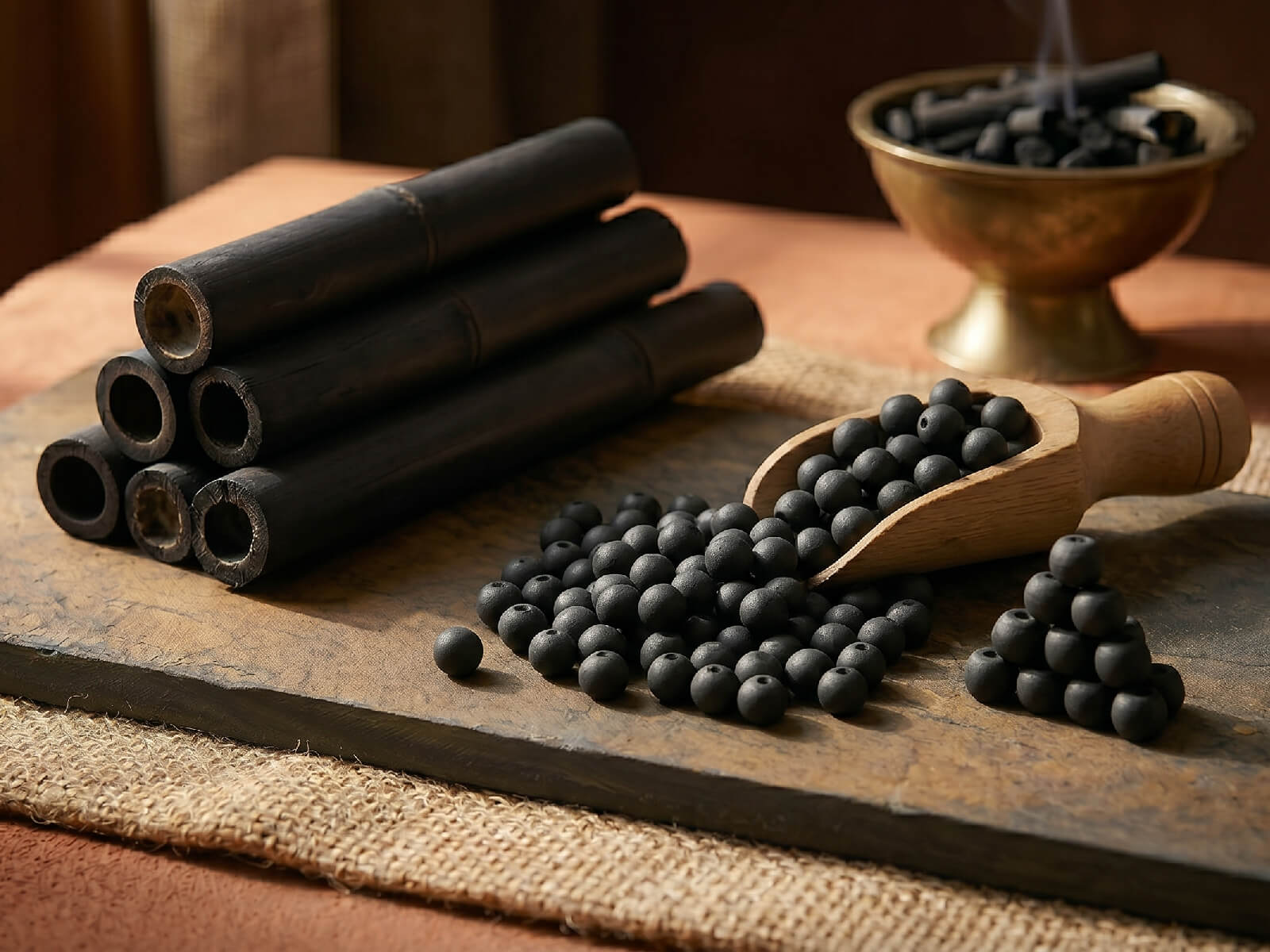 Bamboo
Bamboo Charcoal Beads
Small beads for dehumidifiers and air fresheners
Who's buying activated carbon from WoodCharcoal.in?
Water + air filter OEMs
Granular and bead activated carbon for residential under-sink filters, RO pre-filters and air purifier cartridges. OEM packs in mesh-graded bulk + private-label sachets.
Pharma + lab supply
Coconut shell pharma-grade carbon for decolourisation and adsorption. ASTM D4607 testing, FDA on request, full COA documentation per lot.
Aquaculture + water treatment
Rounded pellets and granular carbon for fish ponds, biofilters and municipal water plants. Heavy-metal tested. Tonne-scale supply, MOQ 500 kg.
Buying by the tonne? Apply for wholesale pricing →
Activated carbon specifications
Adsorbent properties
- Fixed carbon: > 90% (bamboo) · > 92% (coconut)
- BET surface area: 800–1200 m²/g (bamboo) · > 1100 m²/g (coconut)
- Iodine number: > 950 mg/g — adsorption strength benchmark
- Ash: < 5%
- Moisture: < 5%
- Hardness: > 95% (coconut, ball-pan)
Standards & testing
- ASTM D4607: iodine number per lot
- BET surface area: reported on COA
- FDA food-water contact: on request (coconut pharma grade)
- Heavy metals tested: Pb, Cd, As, Hg — per lot
- HSN 3802 · GST 18% (different from raw charcoal at HSN 4402, 5%)
- Surface dispatch: 4–10 days pan-India
Material & dispatch
- HSN 4402: 4402 10 00 (wood) · 4402 90 10 (coconut shell) · 4402 90 90 (other vegetable charcoals)
- GST 5%: standard rate for charcoal (HSN 4402); 18% on activated carbon (HSN 3802) per CBIC rate notification
- No virgin pulp / no plastic binder: compressed with natural starch where applicable
- Moisture controlled: kiln-dried to < 6% — packs ship hard, light and ready to fire
- Surface dispatch only: UN 1361 Class 4.2 — air freight is not offered (regulatory)
- Pan-India delivery: Shiprocket surface — 4–10 days typical, all serviceable PIN codes
Frequently asked questions
What's the difference between raw charcoal and activated carbon?
Raw charcoal is carbonised biomass — useful as fuel and a mild adsorbent (50–200 m²/g surface area). Activated carbon has been put through a second high-temperature steam or chemical process that opens millions of internal pores per gram, expanding surface area to 800–1200+ m²/g. That's what makes it the engineering-grade adsorbent for water, air, gold recovery and pharma.
Coconut shell activated vs bamboo activated — which should I buy?
Coconut shell (> 92% fixed carbon, > 1100 m²/g) — pharma and high-end water filtration; harder grain, longer service life, higher cost. Bamboo (> 90% fixed carbon, 800–1200 m²/g) — residential filters, air purifiers, humidifiers, dehumidifier media; softer grain, lower cost, faster sorbent kinetics for ambient air applications. Coconut for once-a-year service intervals, bamboo for replaceable consumables.
What sizes / forms do you supply?
Activated granular (4×8, 8×30, 12×40 mesh) — water filter beds and gas-phase carbon. Powder (200+ mesh) — pharma, food and beverage decolourising. Tablets — residential water filters + humidifier reservoirs. Beads (8–12mm) — air purifiers and dehumidifier sachets. Pellets — aquaculture biofilters. Mix-and-match across lot, with bespoke sizing for OEM contracts.
Is activated carbon safe for drinking-water filters?
Yes — coconut shell activated carbon is the recommended media for residential and municipal drinking-water filtration worldwide. Our pharma-grade lots are ASTM D4607 tested and FDA-on-request for direct food + water contact. Heavy-metal tested per lot. Industrial buyers get full COA documentation.
How often does activated carbon need to be replaced?
Depends on contact load. Residential under-sink water filter: 6–12 months. Aquarium biofilter: 4–6 weeks. Air purifier carbon stage: 3–6 months. Industrial water plant: typically months to a year depending on flow. Once the carbon stops removing taste/odour/chlorine, it's saturated — replace it. Spent carbon can be incinerated or thermally re-activated by an industrial regenerator.
Why is activated carbon GST 18% when other charcoal is 5%?
Activated carbon is classified under HSN 3802 ("activated carbon; activated natural mineral products") which CBIC has notified at 18% GST. Raw charcoal sits under HSN 4402 at 5%. The activation step (steam at > 800 °C or chemical impregnation) materially changes the product specification, hence the different rate. We invoice with the correct HSN per SKU.
Other questions? See our general FAQ or contact our team.
Hotels · Restaurants · Caterers · Distributors
Buying activated carbon by the tonne?
Verified wholesale accounts get 15% off D2C list, NET-15 invoice terms and direct-from-kiln dispatch.
Cross-shop: charcoal powder · natural lumps (feedstock) · water filtration · cosmetic-grade range