Charcoal Powder
Milled charcoal powder — cosmetic grade through activated carbon feedstock
Bamboo + coconut shell powders for cosmetics, skincare and food-grade detox. Wood powder for soil, biochar and industrial filtration.
- FSSAI
- ISO 9001
- IS-1448
- Halal
- Made in India
Charcoal powder is finely milled carbonised biomass — particle sizes from 200 mesh down to micronised cosmetic grade. It's a feedstock more than a finished fuel: the customers are formulators, agri suppliers and activated carbon plants, not BBQ pits.
Bamboo charcoal powder dominates the cosmetic and skincare end — face masks, cleansers, toothpaste, food-grade detox products. High surface area, food-safe, heavy-metal tested. Coconut shell powder is the global feedstock of choice for steam-activated carbon production (water and air filtration). Wood charcoal powder is the workhorse — used in soil amendment, biochar agriculture programmes, natural cosmetics and industrial filtration.
Powders ship under HSN 4402, GST 5%. Heavy-metal testing on cosmetic-grade lots; FSSAI on food-contact SKUs. Surface dispatch only (UN 1361).
How charcoal powder compares to its closest substitutes
Charcoal powder isn't really competing with LPG / PNG (different use case) — but the comparison stays useful for buyers evaluating biochar against synthetic soil additives or industrial coal dust against carbonised biomass.
| Dimension | LPG | PNG | Synthetic briquettes | Coal | Charcoal (WoodCharcoal) |
|---|---|---|---|---|---|
| Source | Petroleum LPG (propane + butane) | Fossil natural gas, piped | Coal fines + paraffin / sawdust + petroleum binders | Mined bituminous or lignite — fossil carbon | Carbonised waste biomass — wood, bamboo, coconut shell |
| Calorific value | ~11,900 kcal/kg (very high) | ~8,500 kcal/Nm³ | 5,500–6,500 kcal/kg | 4,000–6,500 kcal/kg | 6,800–7,800 kcal/kg |
| Fixed carbon | Hydrocarbon gas — not measured | Methane gas — not measured | 55–65% (binder dilutes carbon) | 45–70% with high volatiles | 70–92% (coconut shell + activated top the range) |
| Ash residue | Zero | Zero | 10–15% — sooty, sticks to grates | 10–20% — clinker forms in grate | < 4% (premium grades < 3%) |
| Smoke & odour | Clean flame, faint hydrocarbon smell | Clean flame, near-odourless | Acrid smoke from binders, plastic notes | Heavy black smoke + sulphur dioxide | Near-smokeless once lit — clean wood aroma |
| Burn time / hold | Continuous — depends on flow | Continuous — depends on flow | 60–90 min, uneven | Long burn but slow to light | 2–4 hrs lump · 60–90 min hookah hex · 4–6 hrs blocks |
| Food-contact safety | Safe — gas flame, no residue | Safe — gas flame, no residue | Avoid for direct food cooking — binders contaminate | Avoid — sulphur transfers to food | Food-safe — used in tandoor, sigri and BBQ for centuries |
| Cost per kcal delivered | ₹ 4.5 / 1000 kcal (subsidised), ₹ 6 (commercial) | ₹ 3.8 / 1000 kcal at metered rate | ₹ 2.8 / 1000 kcal — but high ash wastes heat | ₹ 1.5 / 1000 kcal — but environmental + cleaning cost | ₹ 2.2 / 1000 kcal — and zero ongoing infra |
| Carbon footprint | ~3 kg CO₂e per kg burned (fossil) | ~2.7 kg CO₂e per kg burned (fossil) | ~2.8 kg CO₂e + petroleum binder emissions | ~2.4 kg CO₂e per kg — highest particulate load | Near carbon-neutral — agri-waste biomass cycle |
Sources: BEE biomass factsheets, ICAR-NIRJAFT char comparative studies, MSDS sheets for syndicated petroleum-binder briquettes.
Shop charcoal powder
All 3 charcoal powder SKUs across wood, bamboo and coconut shell. Tap any product for pack sizes, fixed-carbon %, calorific value and live inventory.
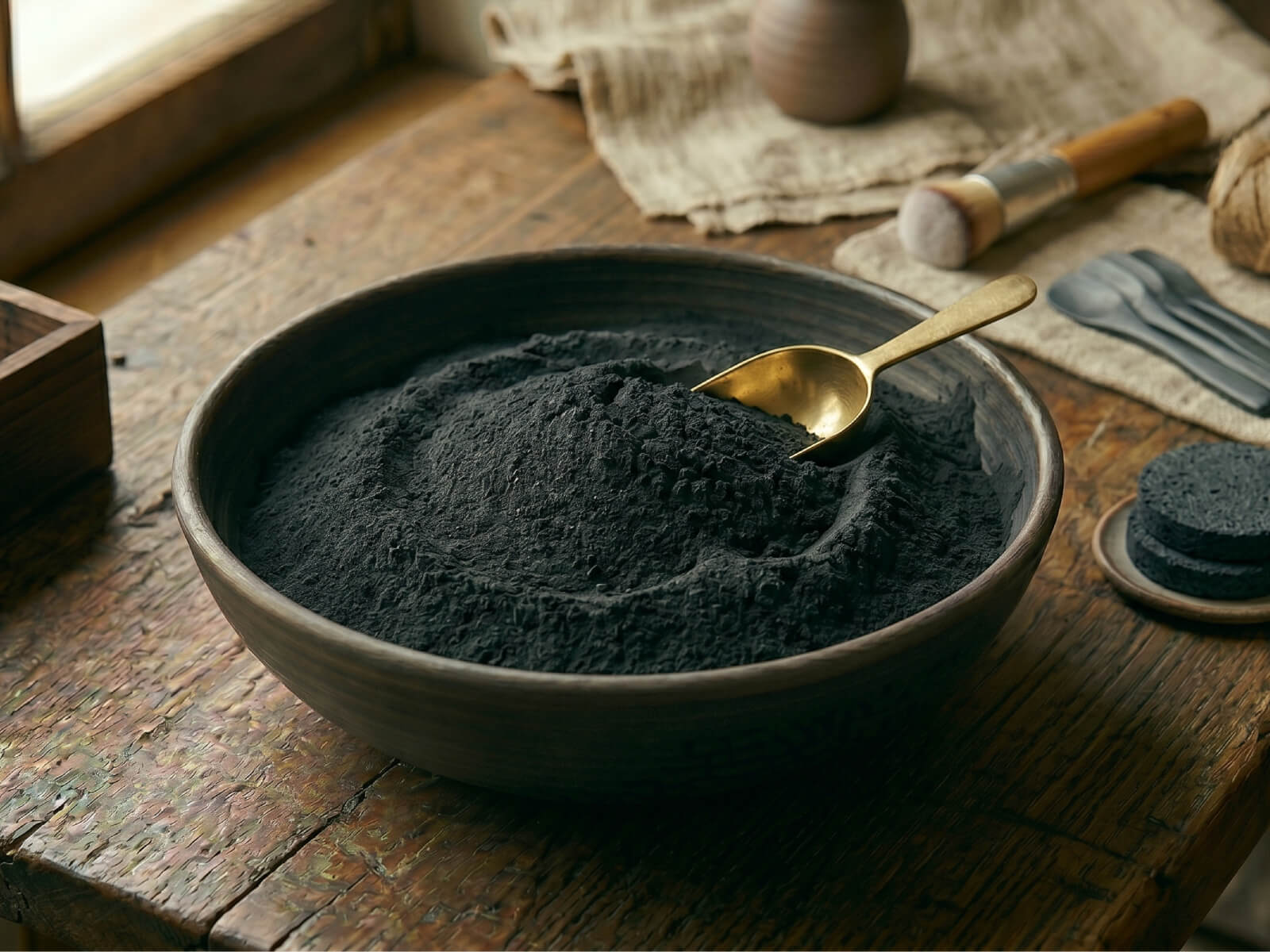 BambooBestseller
Bamboo Charcoal Powder
Ultra-fine bamboo charcoal for skincare and detox
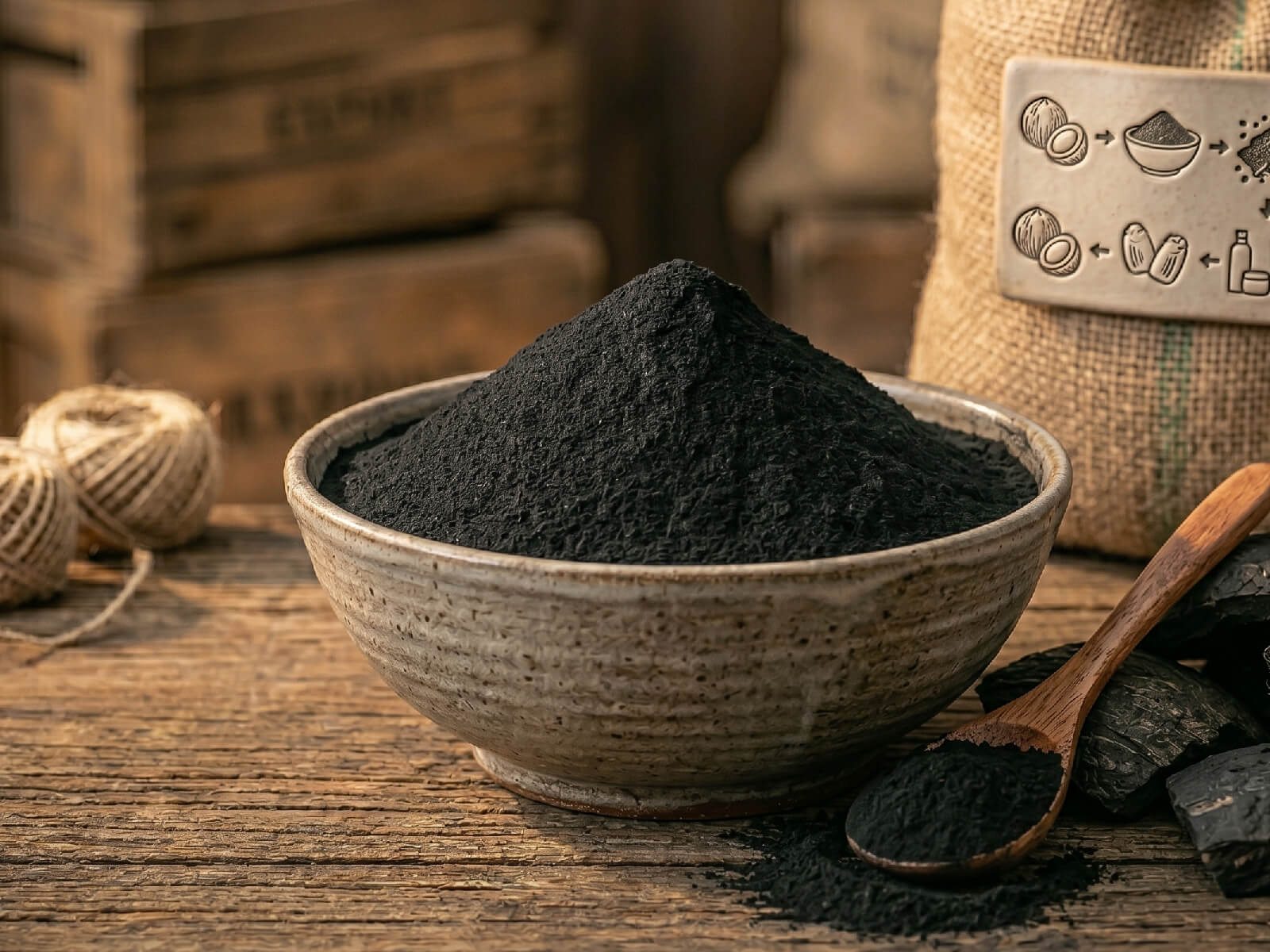 Coconut
Coconut Shell Charcoal Powder
Ground coconut shell charcoal — cosmetic and AC feedstock
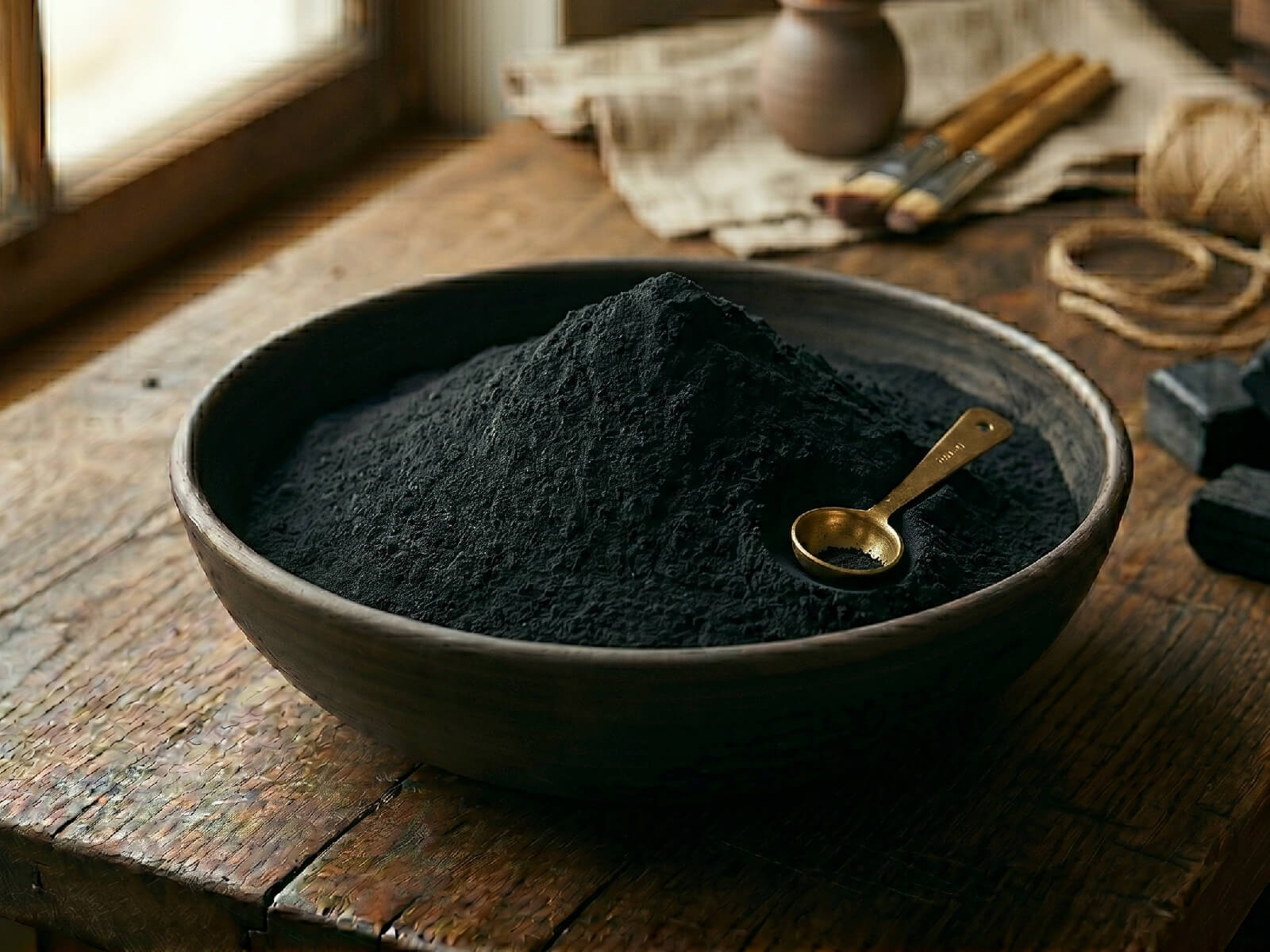 Wood
WoodWood Charcoal Powder
Finely milled hardwood charcoal for cosmetics and agriculture
Who's buying charcoal powder from WoodCharcoal.in?
Cosmetic + wellness formulators
Bamboo + coconut shell powder for face masks, cleansers, toothpaste, soaps. Cosmetic grade with heavy-metal certificate per lot. 500g through 25kg packs.
Activated carbon plants
Coconut shell powder as the global standard feedstock for steam-activated carbon. Container loads, COA per lot, SGS on request. Direct-from-kiln supply.
Agri + biochar programmes
Wood charcoal powder + fines as soil amendment and livestock feed additive. Bulk 50kg sacks, MOQ 500 kg. Wholesale pricing with NET-15 terms.
Buying by the tonne? Apply for wholesale pricing →
Powder specifications
Particle + composition
- Fixed carbon: 70–86% depending on source
- Particle size: 325 mesh cosmetic · 100–200 mesh standard · 50–100 mesh activation feedstock
- Ash: < 3% (coconut) to < 8% (wood)
- Moisture: < 6%
- Surface area (raw): 50–200 m²/g — see /activated/ for adsorbent-grade
- Heavy metal tested: Pb, Cd, As, Hg on cosmetic-grade lots
Standards every WoodCharcoal SKU passes
- FSSAI registered: approved for food-grade applications (tandoor, sigri, BBQ, smokers)
- ISO 9001: quality management system across our Rajkot facility + partner kilns
- Halal certified: hookah and food-contact grades on request — required for Middle East export
- IS-1448 calorific value testing: Indian Standard test method on every batch
- State Pollution Control Board: consent to operate at carbonisation kiln + partner sites
- UN 1361 safe transport: surface dispatch only — air freight requires special certification
- 100% waste-stream sourced: no virgin timber felling — agri-residue + coconut byproduct only
- Made in India: Gujarat, Maharashtra and South India carbonisation under GMP processes
Material & dispatch
- HSN 4402: 4402 10 00 (wood) · 4402 90 10 (coconut shell) · 4402 90 90 (other vegetable charcoals)
- GST 5%: standard rate for charcoal (HSN 4402); 18% on activated carbon (HSN 3802) per CBIC rate notification
- No virgin pulp / no plastic binder: compressed with natural starch where applicable
- Moisture controlled: kiln-dried to < 6% — packs ship hard, light and ready to fire
- Surface dispatch only: UN 1361 Class 4.2 — air freight is not offered (regulatory)
- Pan-India delivery: Shiprocket surface — 4–10 days typical, all serviceable PIN codes
Frequently asked questions
Is charcoal powder safe to ingest?
Bamboo and coconut shell charcoal powder are food-safe when sourced from a controlled kiln + heavy-metal tested — that's our cosmetic / food-grade specification. Activated charcoal (different SKU, activated process) is the version used in clinical detox; raw charcoal powder is for cosmetic + topical use unless explicitly labelled food-grade. Always check the COA before formulating an ingestible product.
What particle size do you supply?
Cosmetic grade (bamboo + coconut): 325 mesh / ~45 micron typical, with finer micronisation on request. Standard wood powder: 100–200 mesh. Activated carbon feedstock: 50–100 mesh — coarser because the activation step re-mills. We'll supply a particle size distribution (PSD) chart with the COA for any lot > 25 kg.
Can I use charcoal powder as a soil amendment / biochar?
Yes — wood charcoal powder and fines are commonly used in soil amendment programmes (sometimes called biochar). Mix into compost or apply directly to row crops to improve water retention + cation exchange capacity. Wholesale lots in 25kg / 50kg sacks are available; MOQ 500 kg with NET-15 terms for verified agri buyers.
What's the difference between raw charcoal powder and activated charcoal powder?
Raw charcoal powder is milled carbonised biomass — surface area ~50–200 m²/g. Activated charcoal powder has been steam or chemically activated to expand the internal pore structure — surface area 800–1200 m²/g (bamboo) or > 1100 m²/g (coconut). Use raw for cosmetics, soil and food colouring; use activated for adsorption, filtration, gold recovery and pharma.
Do you supply private-label cosmetic charcoal?
Yes — bamboo and coconut shell charcoal powder in 500g, 1kg and 5kg packs with your label. MOQ 100kg per SKU. Comes with FSSAI documentation, heavy-metal test certificate and cosmetic-grade COA per lot. Apply for wholesale to start.
What's the shelf life?
Sealed: 24 months in original packaging at room temperature. Once opened, transfer to an airtight container — charcoal is hygroscopic and will pick up ambient moisture, which dilutes the active surface chemistry. Cosmetic-grade powders should be stored away from strong odours (perfumes, solvents) because adsorption is non-selective.
Other questions? See our general FAQ or contact our team.
Hotels · Restaurants · Caterers · Distributors
Buying charcoal powder by the tonne?
Verified wholesale accounts get 15% off D2C list, NET-15 invoice terms and direct-from-kiln dispatch.
Cross-shop: activated carbon · compressed briquettes · cosmetic-grade collection · water filtration range