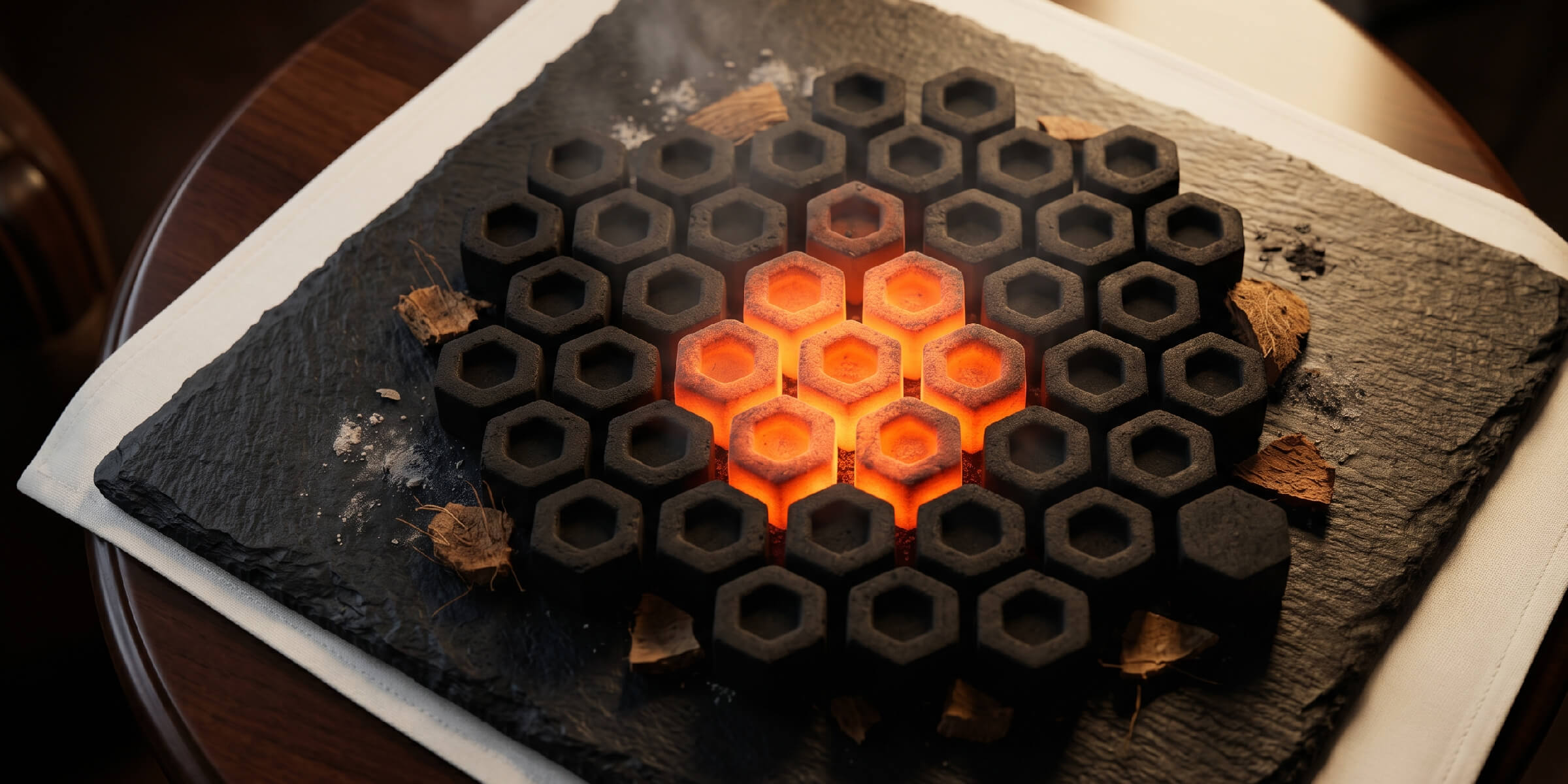
Coconut Shell Charcoal
Highest-fixed-carbon charcoal for hookah, export and activated carbon
Coconut shell charcoal is prized worldwide for its clean, ashless burn and exceptional fixed-carbon content. Our hexagon briquettes meet the specifications demanded by premium shisha lounges across the Middle East and Europe.
 CoconutBestseller
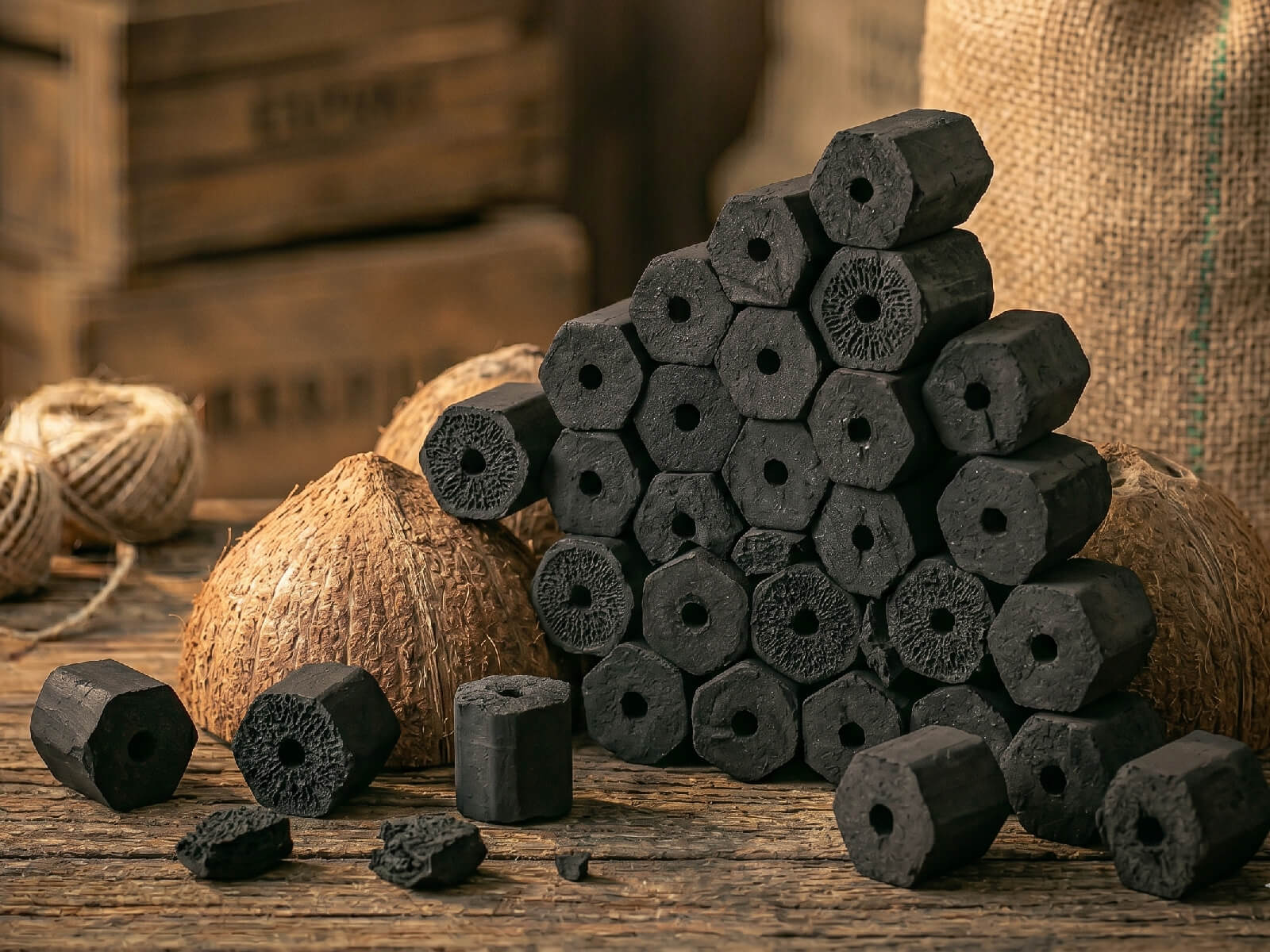
Coconut Shell Hexagon Briquettes
Industry-standard hexagons for premium hookah lounges
 Coconut
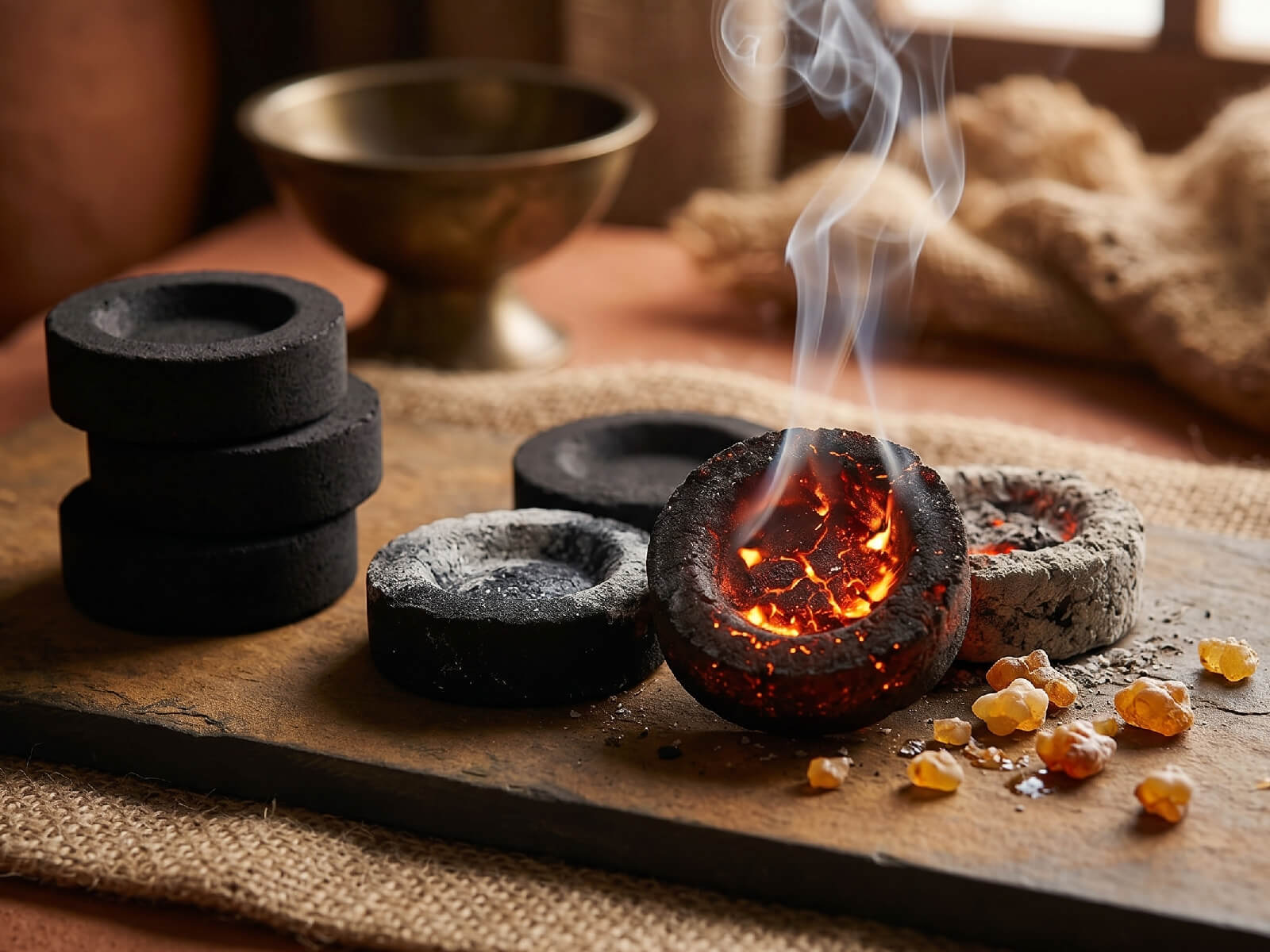
Magic Charcoal
Premium round coconut briquettes — 99% purity, low-smoke
 Coconut
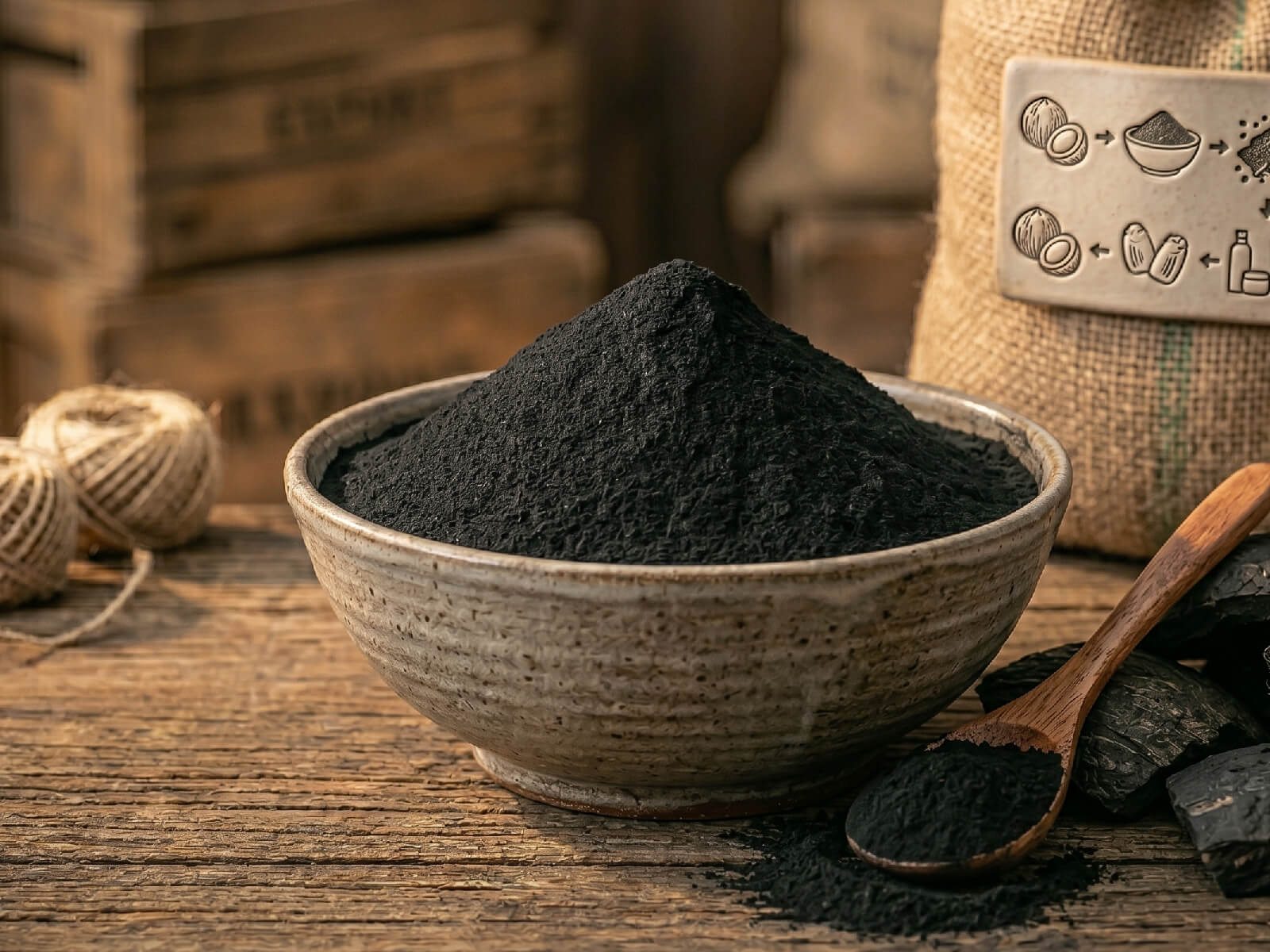
Coconut Shell Charcoal Powder
Ground coconut shell charcoal — cosmetic and AC feedstock
 Coconut
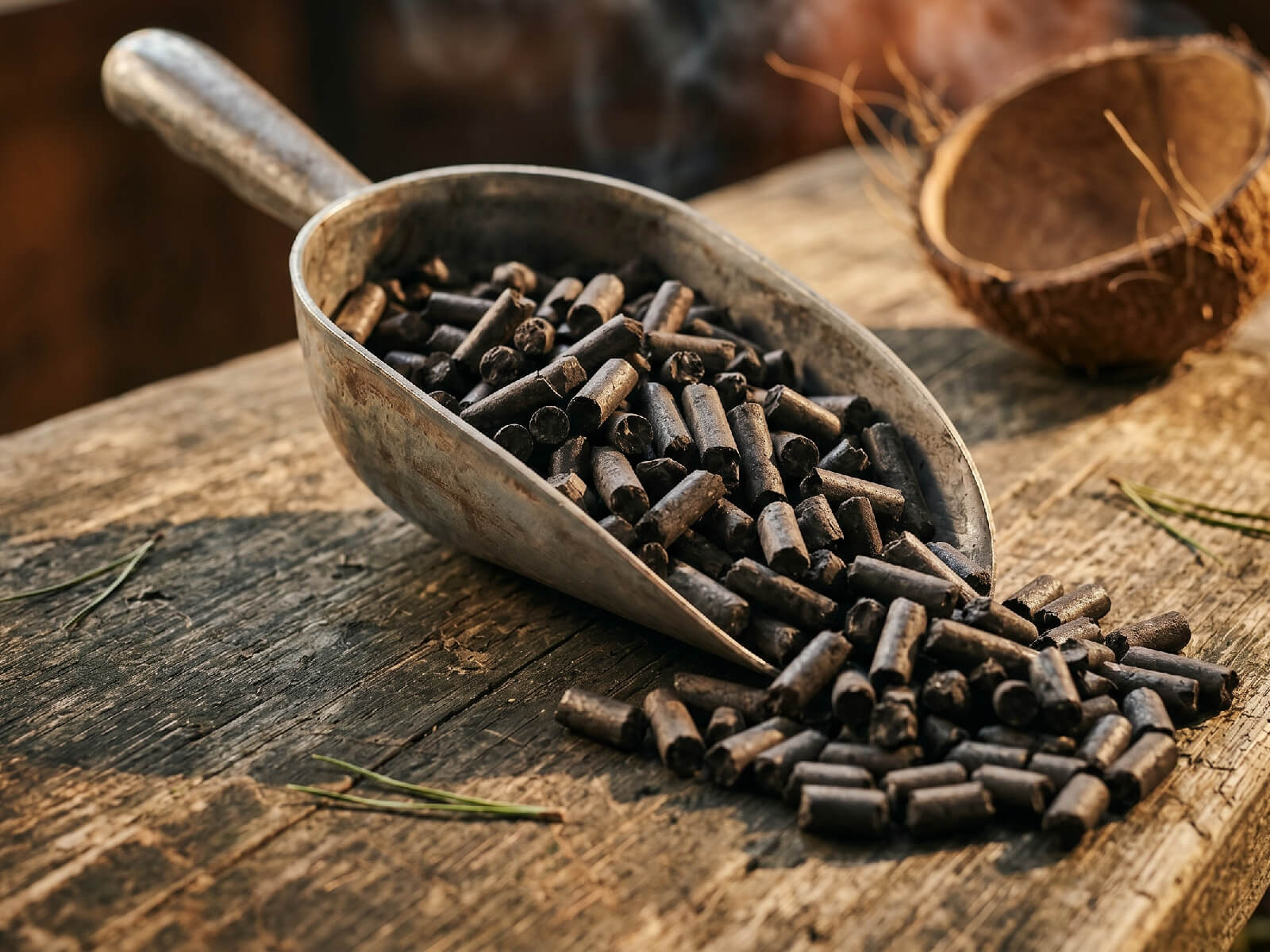
Coconut Shell Charcoal Pellets (Cylindrical)
Compressed cylindrical pellets — long-burn fuel for pellet grills
 Coconut
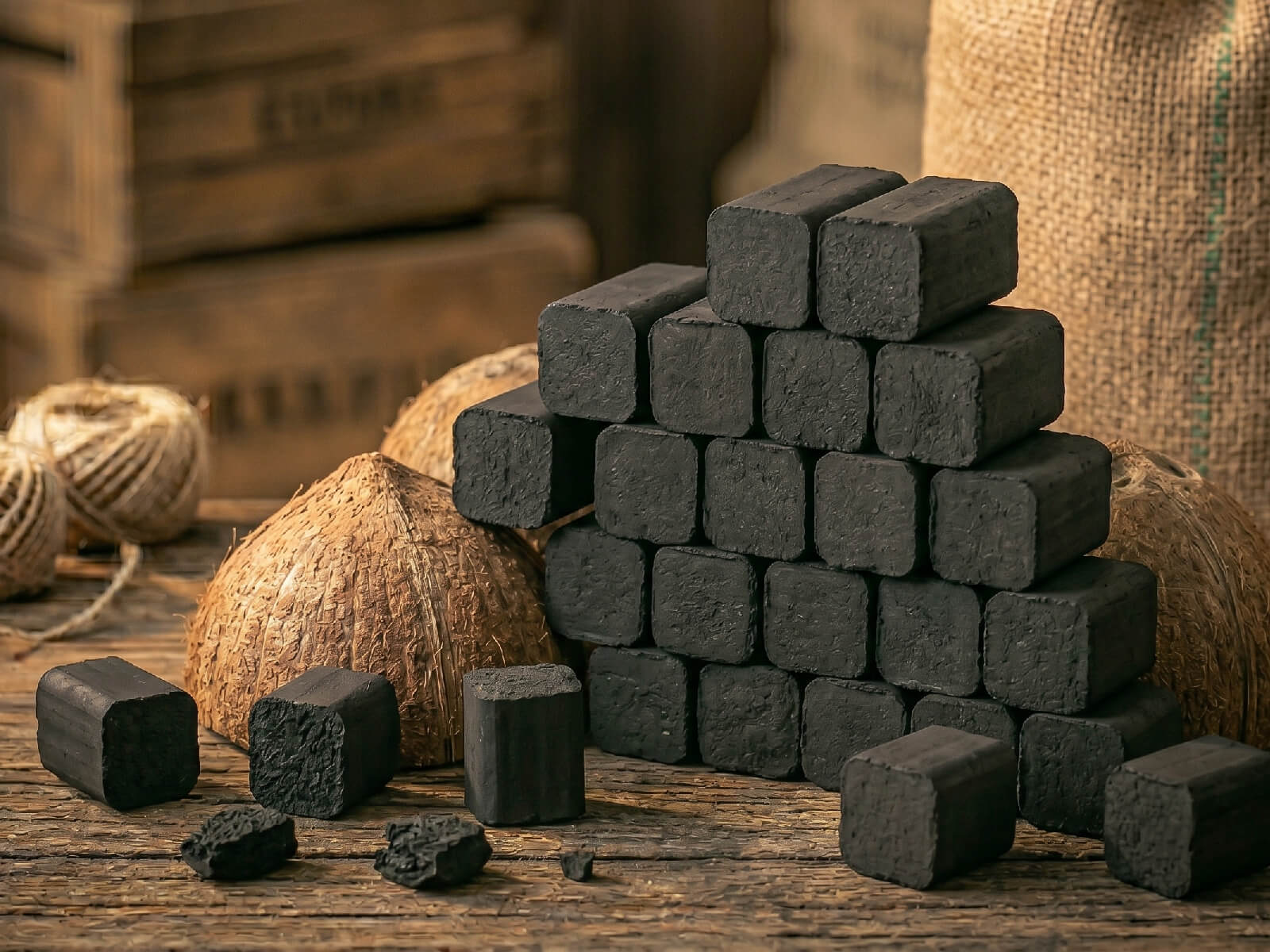
Coconut Shell Charcoal Briquettes (Standard)
General-purpose coconut shell blocks for catering and industry
 Coconut
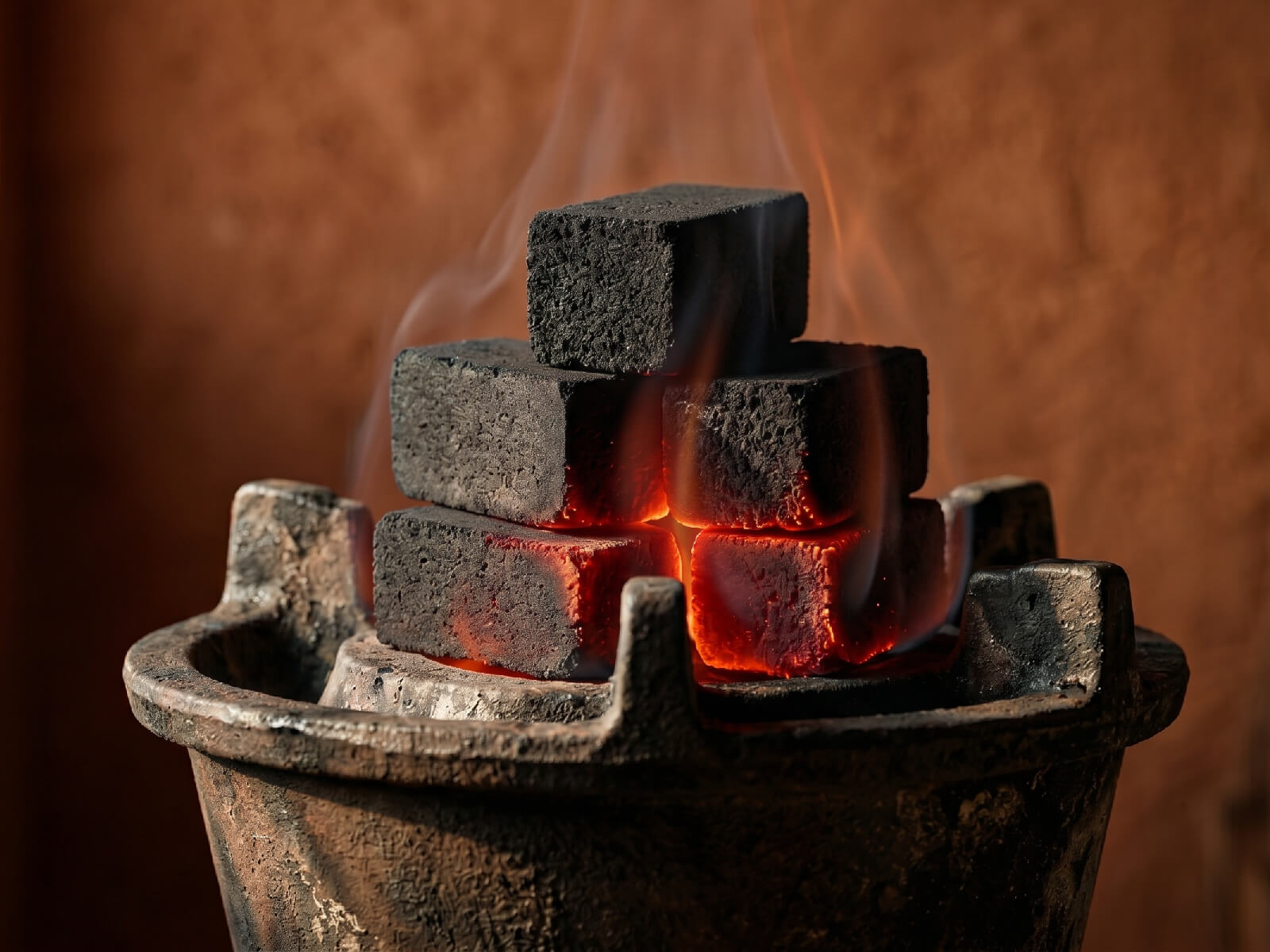
Coconut Shell Charcoal Blocks
Solid dense blocks — long-burn for traditional grilling
 Coconut
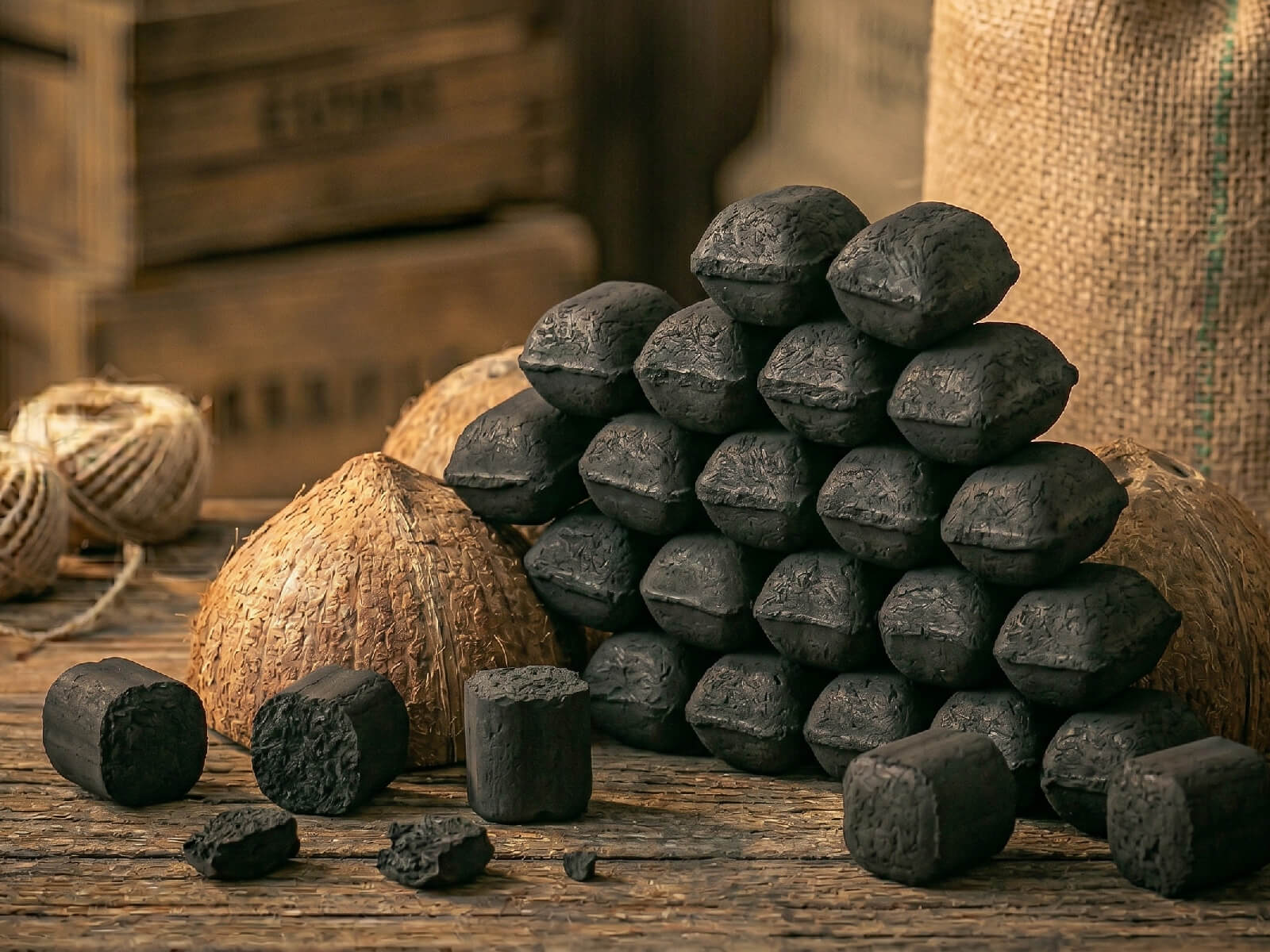
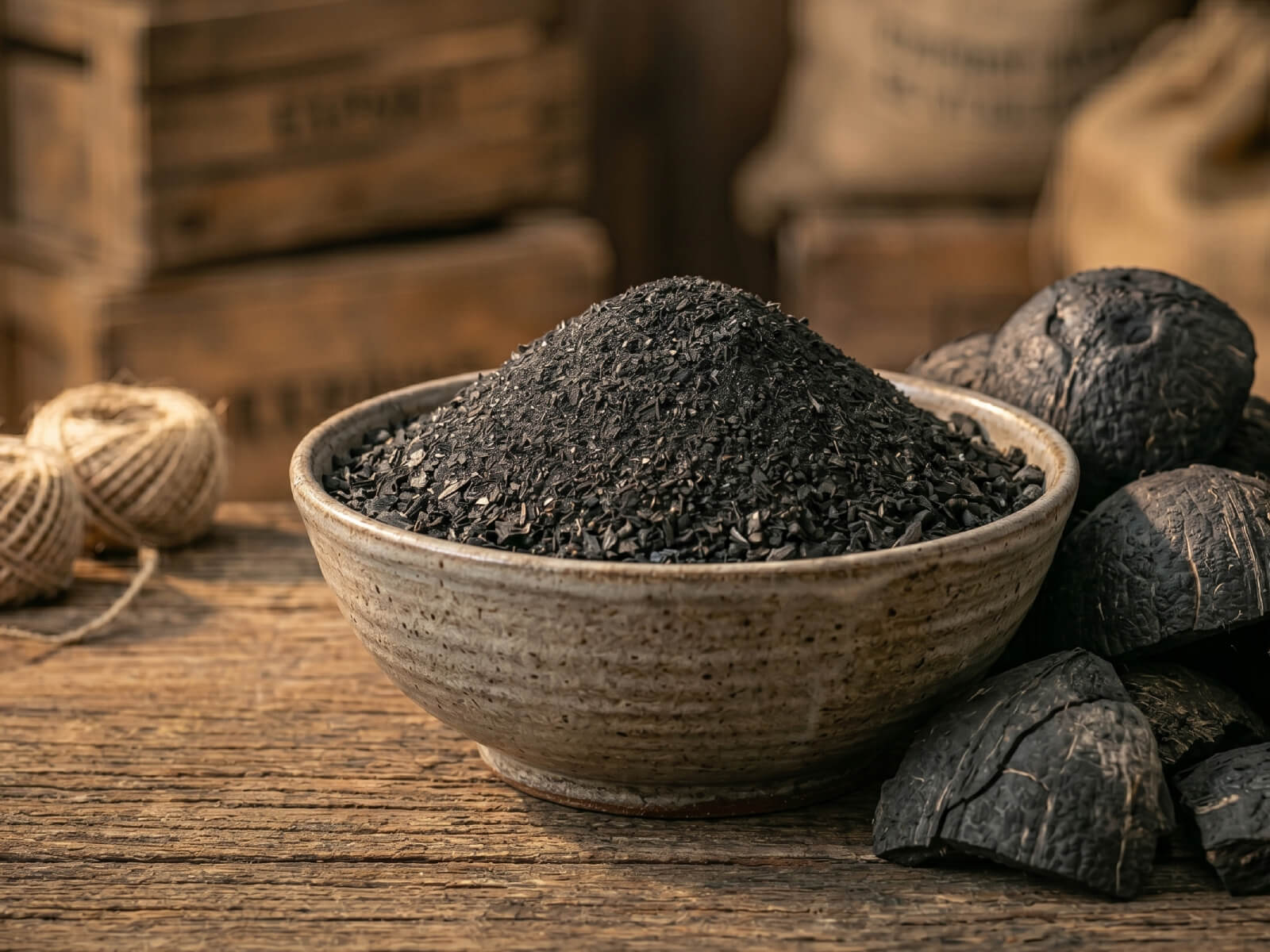
Coconut Shell Pillow Briquettes
Pillow-shape coconut briquettes for BBQ and hospitality
 Coconut
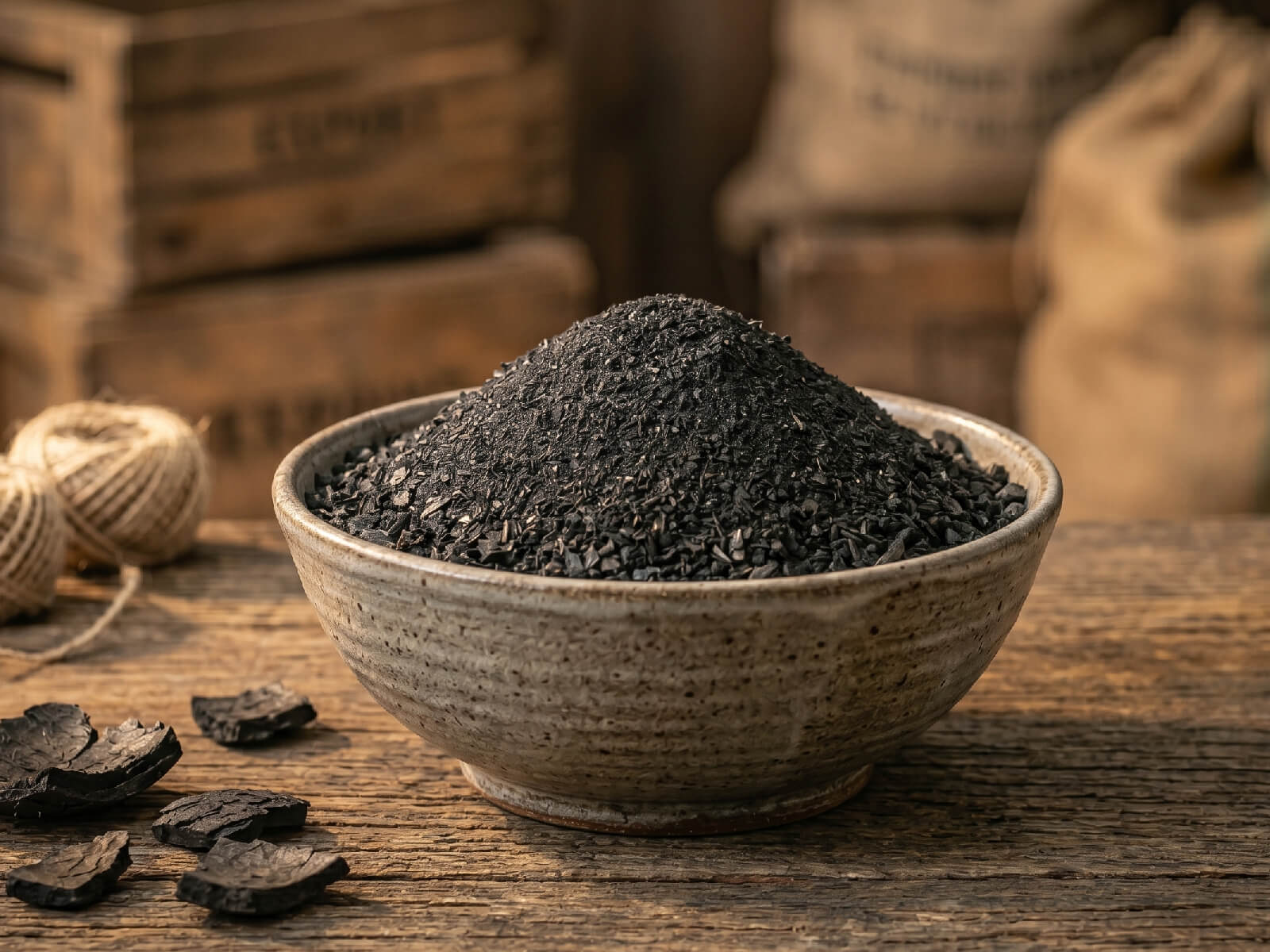
Coconut Shell Industrial Lumps
Industrial-grade coconut shell lumps — feedstock for activated carbon
 Coconut
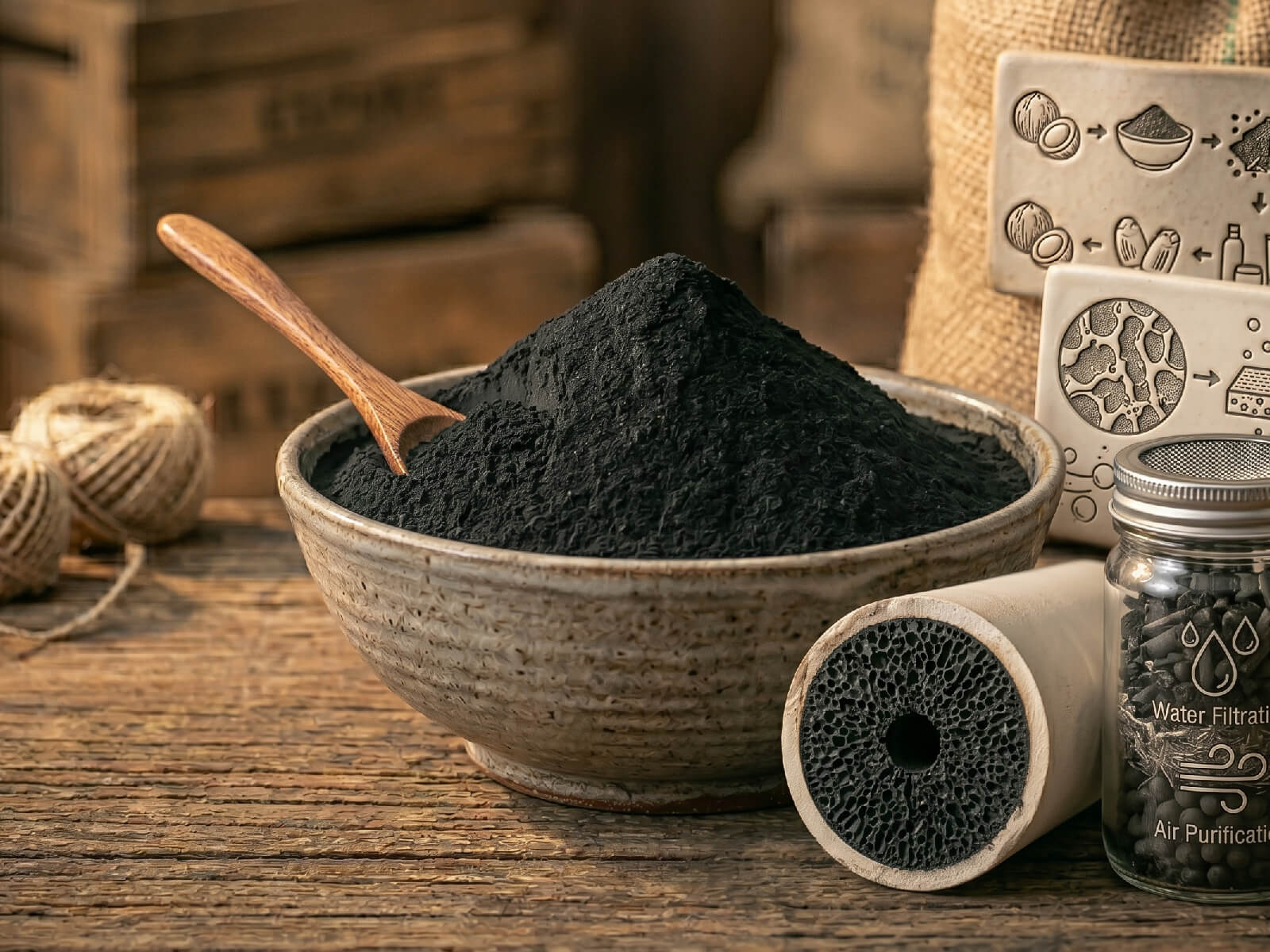
Coconut Shell Charcoal Fines
Sub-mm coconut shell charcoal — activated carbon & soil
 Coconut
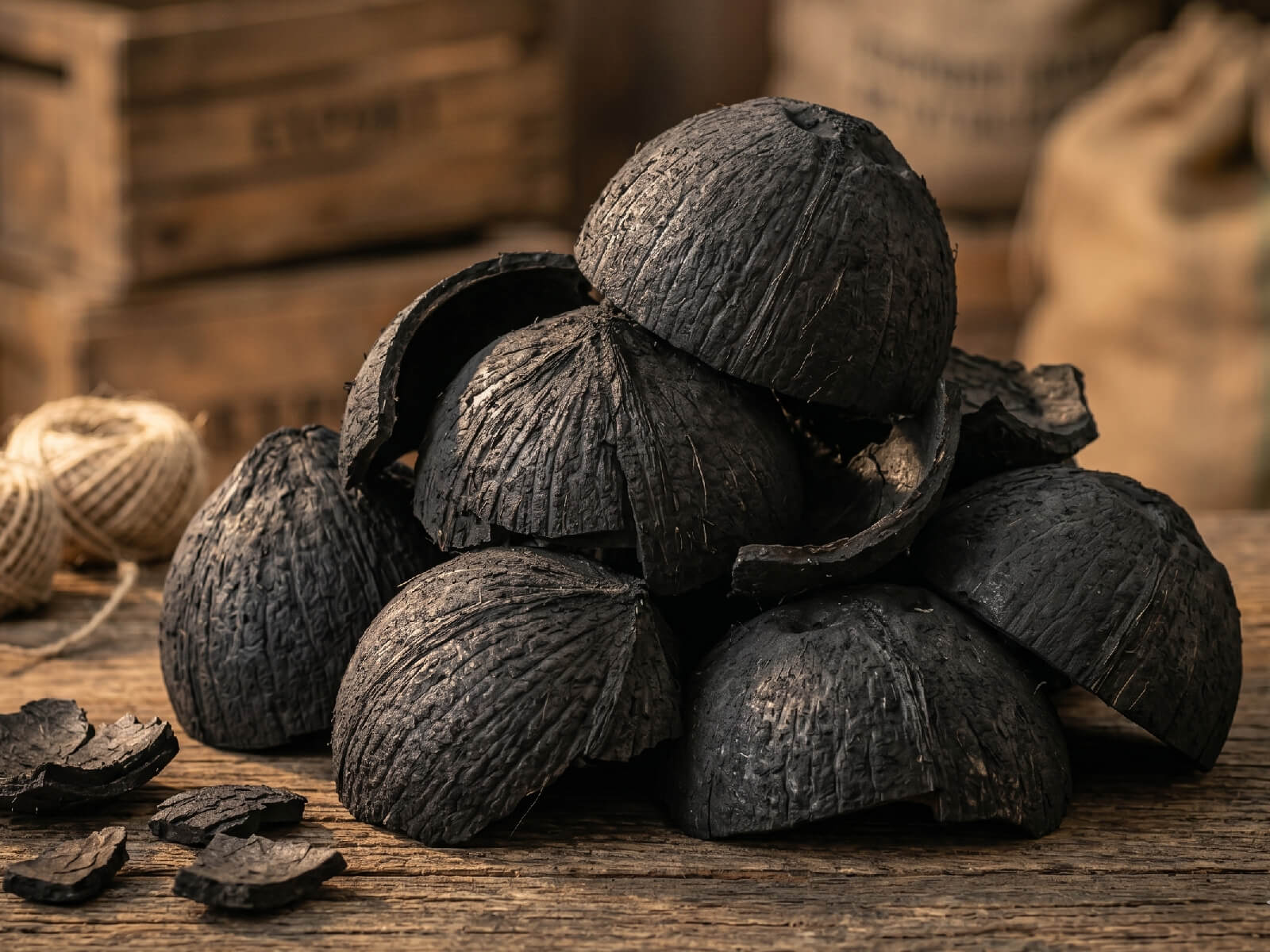
Activated Coconut Shell Charcoal
Highest-grade filtration carbon for water, air and pharma
 Coconut
Coconut Shell Charcoal Lumps
Raw carbonised coconut shell pieces — export grade
 Coconut
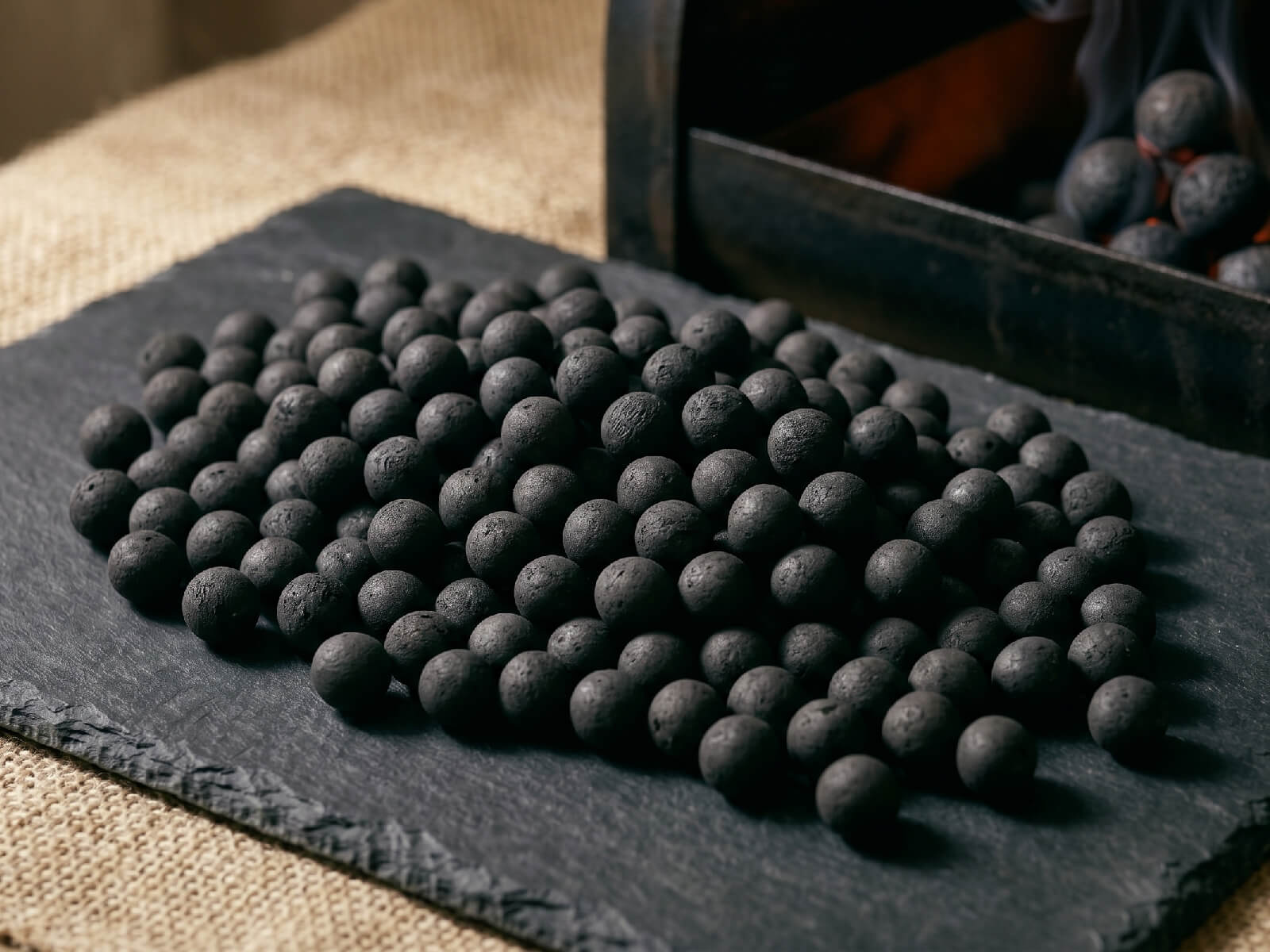
Coconut Shell Charcoal Pellets (Rounded)
Spherical adsorbent pellets — water filtration & aquaculture
 Coconut
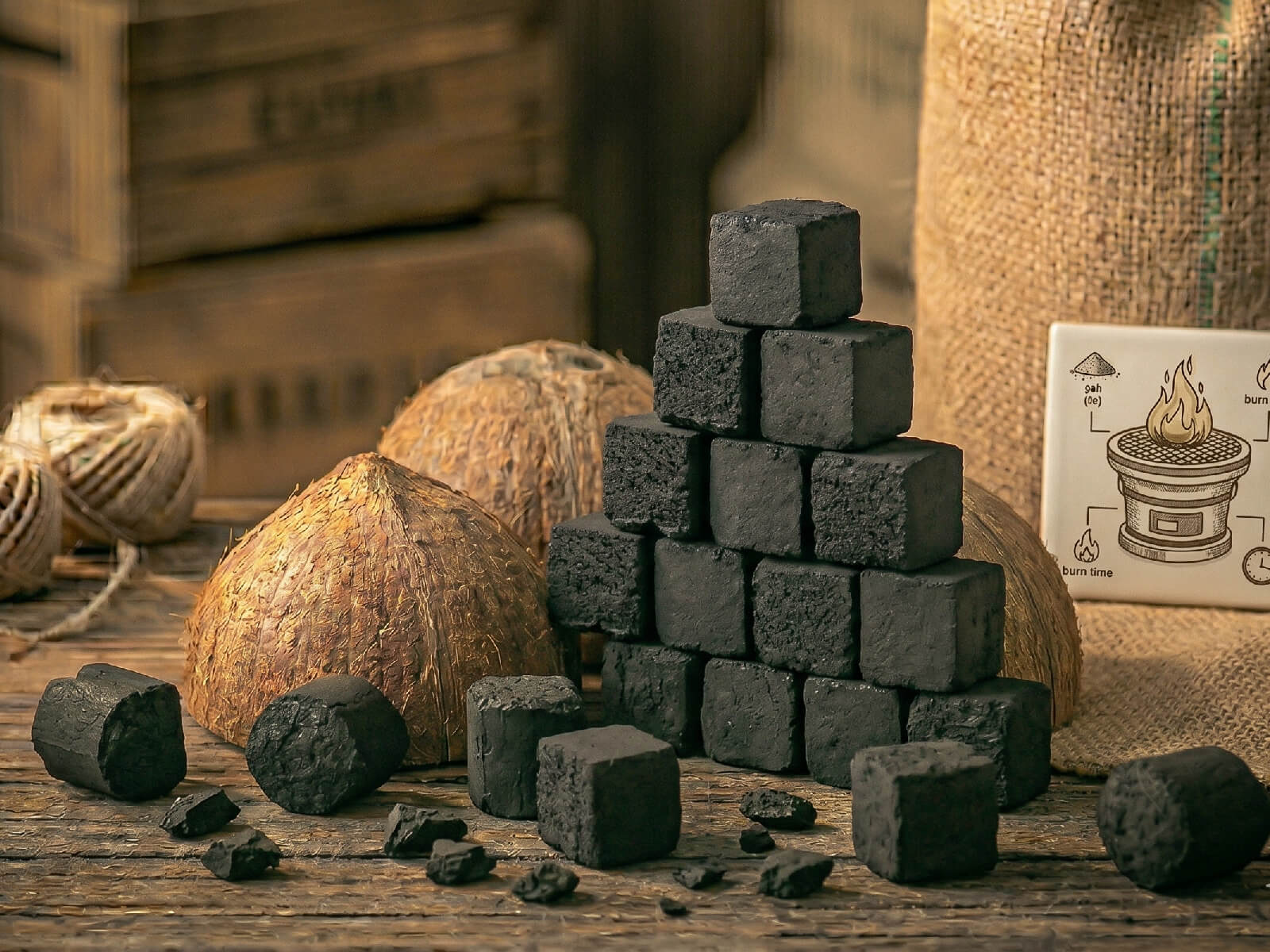
Coconut Shell Cube Briquettes
Minimal-ash coconut cubes — favoured by the Japan market
When to choose coconut shell charcoal
Hookah / shisha — global standard
Coconut shell hexagon briquettes are the global benchmark for hookah: >85% fixed carbon, <2.5% ash, 60–90 minute hold, no aroma. We export to the Middle East, Europe and Japan.
Activated carbon — water + air
Activated coconut shell charcoal is the highest-grade filtration carbon — water purification, air filtration, gold recovery and pharma. Tested per ASTM D4607.
BBQ & restaurant kitchens
Cube and pillow briquettes are the Japan-yakitori and premium-restaurant standard: minimal ash, no smoke, predictable burn.
Understanding coconut shell charcoal — production, specs, and uses
Coconut shell charcoal is produced by carbonising the woody endocarp of mature coconuts — the same hard shell that houses the kernel. India produces an estimated 19 billion coconuts annually (second only to Indonesia), making coconut shell one of the most abundant and lowest-cost premium-grade charcoal feedstocks available. The shell's natural lignin content and dense fibre structure carbonise into a charcoal with the highest fixed carbon and lowest ash of any common feedstock.
Standard coconut shell charcoal exceeds 85% fixed carbon, with ash under 2.5% and a calorific value of 7,400–7,600 kcal/kg. The combination of high heat and minimal residue is why coconut shell briquettes — particularly hexagon (26mm/25mm), cube (25mm/25mm), and pillow forms — have become the global benchmark for hookah and shisha. A single coconut hexagon delivers 60–90 minutes of clean, odourless heat, letting premium tobacco blends express their full flavour profile. Japan's yakitori restaurants similarly favour coconut cubes for their stackability, low ash, and consistent burn.
The other commercial pillar is activated carbon. Coconut shell is the preferred precursor for high-grade activated carbon worldwide — its dense, hard carbon resists attrition during steam activation, producing granules with 1100+ m²/g BET surface area and excellent mechanical strength. Activated coconut charcoal goes into water purification (the gold standard for chlorine and VOC removal), air filtration, gold recovery in mining, and pharmaceutical-grade adsorption per ASTM D4607.
Tax classification: standard coconut shell charcoal is HSN 4402 / GST 5%; activated coconut carbon is HSN 3802 / GST 18%. Export-grade coconut hexagons (typically MOQ 1 MT) are heavily exported to UAE, Saudi Arabia, US, EU, and Japan markets.
Coconut charcoal — frequently asked questions
Common questions from retail buyers, hospitality operators, exporters, and industrial procurement teams. Click any to expand.
Why is coconut shell charcoal best for hookah?
Coconut shell has the highest fixed carbon of the three sources (over 85%) and the lowest ash (under 2.5%). The result is a clean, odourless, 60–90 minute burn — the global standard for premium hookah and shisha lounges across the Middle East, US, Europe, and Asia.
What's the difference between hexagon, cube, and pillow briquettes?
Hexagons (26mm/25mm) are the hookah industry standard for shisha lounges — clean burn, predictable fit on standard hookah heads. Cubes (25mm/25mm) are favoured by Japan yakitori and high-end restaurant kitchens for stackability and minimal ash. Pillows are easier to light, popular for home BBQ and hospitality.
How is activated coconut shell charcoal made?
Coconut shell is carbonised at 600–800°C, then steam- or chemically-activated at 700–1100°C to develop pore structure. Our pharma-grade product hits over 1100 m²/g BET surface area, more than 92% fixed carbon, and is supplied with COA per lot per ASTM D4607.
What's the iodine number of your activated coconut carbon?
Standard grade activated coconut carbon hits 900–1000 mg/g iodine number. Pharma-grade exceeds 1100 mg/g. Iodine number correlates with adsorption capacity for small organic molecules and is the standard quick-check measurement for activated carbon quality.
Is coconut shell charcoal Halal and Kosher certified?
Yes. Coconut shell charcoal contains no animal-derived inputs and is naturally Halal- and Kosher-eligible. We hold third-party Halal and Kosher certificates issued for export shipments to the Middle East, US, and EU markets. Certificates available on request.
What's the export grade specification for coconut shell hexagons?
Export-grade hexagons: 26mm × 25mm size, 5–7 minute light-up time, 60–90 minute burn duration, fixed carbon over 85%, ash under 2.5%, moisture under 5%, no chemical binders (food-grade natural starch only). MOQ 1 MT for FOB Mundra/Nhava Sheva. Standard packing: 1 kg / 0.5 kg vacuum-sealed boxes inside 12 kg cartons, 21 cartons per pallet.
Can coconut shell charcoal be used for gold recovery?
Yes. Activated coconut carbon is the preferred adsorbent in carbon-in-pulp (CIP) and carbon-in-leach (CIL) gold recovery processes. The dense, hard granules resist attrition during agitation, and the high BET surface area gives excellent gold-cyanide complex adsorption. We supply mining-grade activated coconut carbon by container load to gold processors in Karnataka, Andhra Pradesh, and Goa.
What's the difference between PAC and GAC activated coconut carbon?
PAC = powdered activated carbon (under 0.18mm particle size) — used in batch water treatment, sugar refining, and pharmaceutical applications. GAC = granular activated carbon (0.4–4mm particles) — used in flow-through filters, industrial gas scrubbers, and gold recovery. Both are produced from the same coconut shell feedstock; particle size depends on the grinding step after activation.
Why is coconut shell preferred over wood for activated carbon?
Coconut shell has higher density and lignin content than wood, producing a harder, more abrasion-resistant activated carbon. The pore-size distribution skews toward micropores (under 2nm) which is ideal for adsorbing small molecules like chlorine, VOCs, and gold-cyanide complexes. Wood-based activated carbon has more meso/macropores, better suited to larger molecules but less mechanically robust.
What HSN code and GST rate applies to coconut shell charcoal?
Standard coconut shell charcoal: HSN 4402 / GST 5%. Activated coconut carbon: HSN 3802 / GST 18%. Export shipments are zero-rated (with LUT bond filed) — no GST is charged but full export documentation is provided. Domestic invoices include CGST+SGST or IGST split per the customer's state.