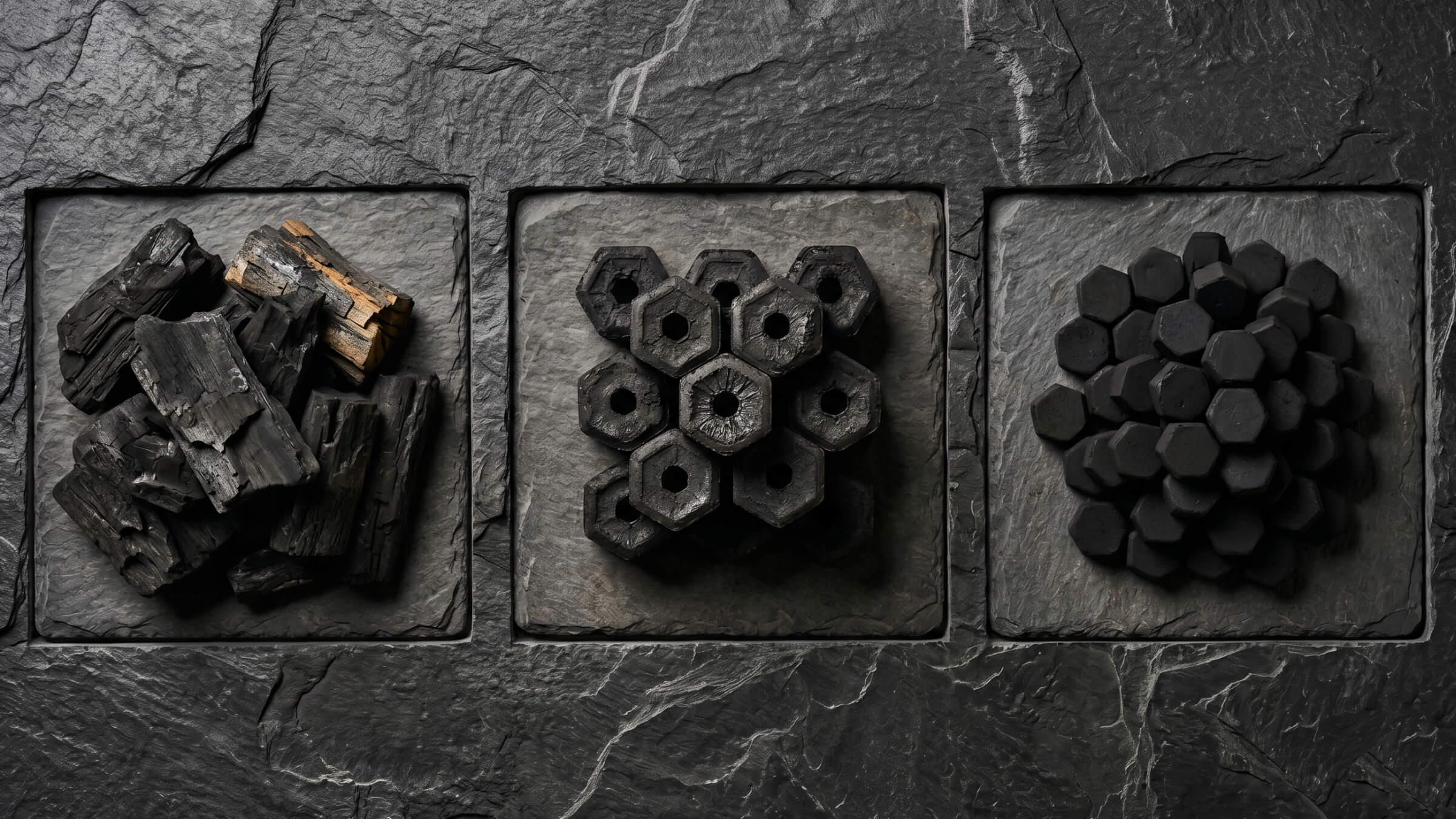
How to Choose the Right Charcoal for Your Restaurant Kitchen
Tandoor, josper, yakitori, hibachi, Western grill — each has a charcoal it's designed around. Here's how a restaurant owner picks the right one and negotiates a bulk contract.
Opening or running a restaurant that centers a grilled, smoked or tandoor menu means charcoal becomes a quietly enormous line item — often ₹40,000–₹1,20,000 per month for a busy kitchen. Getting the charcoal choice right saves real money and, more importantly, makes the food consistent dish to dish, shift to shift, month to month.
Here's the procurement guide, working top-down from your equipment.
Step 1: Identify the equipment
Different grills are designed for different charcoals. Match the two:
Tandoor (clay oven)
- Required heat: 400–480°C
- Best charcoal: Hardwood lumps — mango, acacia, sheesham
- Why: The tandoor's thermal mass needs sustained high heat over hours
- Wrong choice: Coconut shell (runs cooler, temperature drops too much between orders)
- Our pick: Hardwood Charcoal Lumps in 25 kg or 30 kg bags
Josper / Mibrasa charcoal oven
- Required heat: 500–650°C
- Best charcoal: Dense hardwood lumps with low moisture (
<5%) - Why: Josper's fan-forced design needs charcoal that holds structure under airflow; cheap charcoal disintegrates into the grate
- Our pick: Smoked Charcoal Lumps for flavour-forward menus, or premium hardwood lumps for neutral
Yakitori / robata grill
- Required heat: 350–400°C
- Best charcoal: Coconut shell cubes or binchotan-style lumps
- Why: Ultra-low ash (won't fall into the drip tray), neutral flavour, clean burn
- Our pick: Coconut Shell Cube Briquettes
Korean BBQ / hibachi
- Required heat: 300–380°C with flexibility
- Best charcoal: Coconut shell cubes or pillow briquettes
- Why: Tabletop service — customers don't want smoke or ash blowing around; easy to swap out during the meal
- Our pick: Coconut Pillow Briquettes
Western BBQ / smoker / brisket rig
- Required heat: 110–130°C sustained over 8–14 hours
- Best charcoal: Hardwood lumps + wood chunks for smoke
- Why: Low-and-slow cooking needs charcoal that doesn't burn hot; briquettes hold temp better than lumps here
- Our pick: Wood Charcoal Briquettes or hardwood lumps with oak/mango wood chunks
Open-flame street-food grill / angeethi
- Required heat: 300–350°C, intermittent
- Best charcoal: Standard wood briquettes or pillow briquettes
- Why: Economy matters; performance is secondary
- Our pick: BBQ Pillow Briquettes (quick-light for multiple daily setups)
Hookah / shisha lounge
- Required heat: Narrow 180–210°C window on the bowl foil
- Best charcoal: Coconut shell hexagons (industry standard)
- Why: Zero smoke, precise temp, 60–90 min burn matches session
- Our pick: Coconut Shell Hexagon Briquettes
Step 2: Size the monthly order
Rough heuristic per service style:
| Style | Charcoal / cover | 100 covers/day |
|---|---|---|
| Tandoor | 200–300 g | 700–900 kg/month |
| Josper | 300–450 g | 1000–1400 kg/month |
| Yakitori | 150–200 g | 500–650 kg/month |
| Korean BBQ (tabletop) | 350–500 g | 1200–1500 kg/month |
| Western smoker | 400–600 g | 1400–1800 kg/month |
| Hookah (per session) | 80–120 g | — |
Hit 500+ kg/month and you qualify for our 100–500 kg tier (10% off). Above 2 MT and we'll custom-quote shipping and packaging.
Step 3: Negotiate the contract
For a restaurant doing 500+ kg/month, don't buy off the shelf. Contract terms you should negotiate:
- Locked monthly price for 6–12 months (hedges raw material volatility)
- Delivery schedule (e.g. two 30 kg deliveries per week vs one 250 kg)
- COA on request, per lot — confirm in the contract that your supplier will pull the test sheet for any lot you flag, not a generic spec
- Buy-back on defective lots — we test, you test, if the lot's off-spec it goes back at our cost
- 30-day net terms after 3 clean orders
- Custom packaging (your brand printing on the 5 kg bag) for front-of-house or takeaway kits, possible above 1 MT/month
Step 4: Train your team
The best charcoal in the wrong hands still cooks badly. One 30-minute training session on:
- Chimney starter technique (no lighter fluid, ever)
- Ember management (when to add, when to let burn down)
- Between-service shutdown (smother, don't water)
- Re-use policy (dense charcoal CAN be re-used the next session if smothered correctly)
...pays back in 2–3 weeks of reduced waste.
Ready to talk?
Submit a wholesale inquiry with your equipment, monthly volume estimate, and current supplier pain points. We'll come back with a per-SKU sample pack (5–10 kg) so your head chef can cook-test before you commit to volume.
Ready to buy?
Browse our full product catalogue or request wholesale pricing.