Bamboo Charcoal vs Wood Charcoal: Key Differences Explained
Bamboo and wood charcoal look similar but behave differently. Here's how they compare on porosity, burn time, ash, and which to pick for which job.
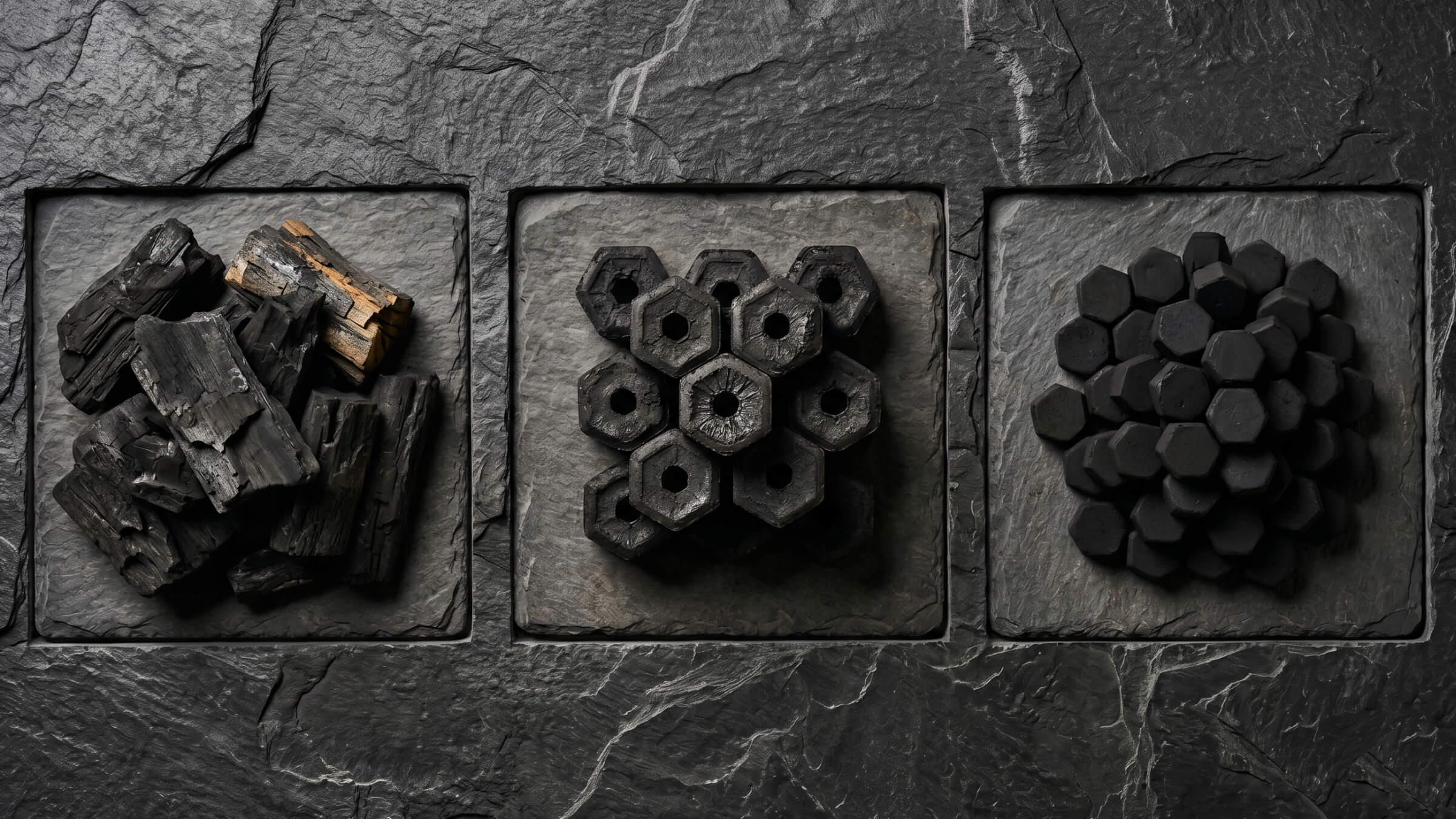
Bamboo charcoal and wood charcoal start at the same place — a plant cellulose structure carbonised in a low-oxygen kiln — but they end up in very different jobs. Wood charcoal goes on your grill. Bamboo charcoal goes in your face mask. Understanding why comes down to one word: porosity.
Porosity is everything
Bamboo grows fast — a culm reaches harvestable maturity in 3–5 years versus 20+ for most hardwoods — and its internal structure is a honeycomb of hollow vascular bundles. When you carbonise it, that structure survives, giving bamboo charcoal a dramatically higher internal surface area than wood charcoal.
That's the whole reason bamboo is preferred for:
- Cosmetics and skincare (the adsorption of impurities)
- Water filtration (surface area per gram)
- Soil amendment (water and nutrient retention)
- Air purifiers (VOC adsorption)
Where wood charcoal wins
Wood is denser, which means more stored energy per cubic centimetre. When you want heat — for a tandoor, a BBQ pit, a metallurgical furnace — wood charcoal delivers more of it for longer. Our hardwood lumps routinely burn 3–4 hours in a closed grill.
Side by side
| Attribute | Wood | Bamboo |
|---|---|---|
| Fixed carbon | 70–78% | 80–84% |
| Ash | 4–8% | 3–5% |
| Burn time (lumps) | 3–4 hrs | 2–3 hrs |
| Surface area (activated) | Moderate | Very high (800–1200 m²/g) |
| Best for | BBQ, industry | Filtration, cosmetics |
Picking for your use case
- Home BBQ or restaurant grill? Wood charcoal.
- Skincare, toothpaste, water filter? Bamboo charcoal.
- Hookah? Neither — coconut shell wins.
Still unsure? Our compare-by-material page has the full side-by-side, or reach out and we'll help you pick.
Ready to buy?
Browse our full product catalogue or request wholesale pricing.